This post contains affiliate links. As an Amazon Associate, I earn from qualifying purchases at no extra cost to you.
Last spring, I hit a wall. My morning walks had become genuinely boring, and my bodyweight routine had plateaued hard. I’ve been a personal trainer and strength coach for over 15 years, so I know exactly what plateau feels like — and I also know exactly how to fix it. Progressive overload is the answer. Always. But adding a weighted vest to my daily walks felt like something I’d been recommending to clients forever without truly stress-testing myself. So I decided to run a proper weighted vest workout walking review experiment on my own body over six full weeks.
The timing made sense. Several of my clients were asking about low-impact ways to increase calorie burn without adding more gym sessions. I needed firsthand data, not just textbook knowledge. That’s when I started researching adjustable vests seriously.
Why I Chose the ExtreSpo Adjustable Weighted Vest
I looked at dozens of options before settling on one. My criteria were specific: adjustable weight, a secure fit for both walking and dynamic movements, decent build quality, and a price point that made sense for everyday use. Fixed-weight vests annoyed me immediately. Progression matters. If I can’t increase the load over time, the tool has a short shelf life.
A few coaches in my professional network had mentioned the ExtreSpo Adjustable Weighted Vest for Women and Men, 11-20lb Weight Vest with 6 Ironsand Weights specifically. The adjustable range of 11 to 20 pounds was a key selling point. That range covers a solid progression window — light enough to start without wrecking your joints, heavy enough to create a real challenge over time.
The reflective strip was a practical bonus. I walk early mornings, often before sunrise. Visibility matters. On the other hand, many competing vests in this price range skip that feature entirely. The ironsand weight packets also intrigued me — they distribute mass differently than steel plates and tend to sit closer to the body’s center of gravity. That detail matters for comfort during longer walks.
First Impressions: Unboxing and Build Quality
The vest arrived well-packaged. My first reaction was positive — it felt denser and more structured than I expected at this price. The material has a neoprene-like texture that’s both durable and slightly breathable. It’s not going to win awards for airflow, but it’s manageable.
Sizing was straightforward. The straps adjusted easily, and I had a snug, stable fit within about two minutes. I wear a large in most athletic gear, and the vest accommodated that without any awkward bunching. The six ironsand weight packets slot into internal pockets cleanly. Each packet is labeled, which makes loading and adjusting simple.
My one initial concern was the zipper closure. It felt slightly stiff on the first use. However, after a few sessions, it loosened up and stopped being an issue. The stitching looked reinforced at all the stress points, which is exactly what you want when the vest is loaded to 20 pounds and you’re dropping into push-up position.
Fit During Movement
The first walk I took lasted 35 minutes at a moderate pace. Bounce and shift were minimal. That surprised me — cheaper vests tend to ride up during extended walking. This one stayed planted. The dual side-buckle system deserves credit for that. Specifically, the lateral compression straps kept everything locked without feeling restrictive through the torso.
How I Tested the ExtreSpo Weighted Vest Over 6 Weeks
I ran a structured protocol. Nothing random, nothing casual. Here’s exactly how six weeks broke down:
- Weeks 1–2: 11 lbs loaded. Daily 40-minute morning walks, 5 days per week. Bodyweight circuit 3x per week (push-ups, lunges, step-ups, bear crawls).
- Weeks 3–4: Bumped to 15 lbs. Walks extended to 50 minutes. Added weighted pull-ups and dips to the circuit.
- Weeks 5–6: Full 20 lbs. Walks at 55–60 minutes. Circuit included plank holds (60 seconds), push-up variations, step-ups with knee drive, and bodyweight squats (3 sets of 20 reps).
I tracked heart rate, average pace, perceived exertion, and weekly bodyweight. I also logged any discomfort, chafing, or equipment issues after every session. Total sessions completed: 42 workouts over 42 days. No missed sessions, which is itself a data point about wearability.
The Bodyweight Circuit Details
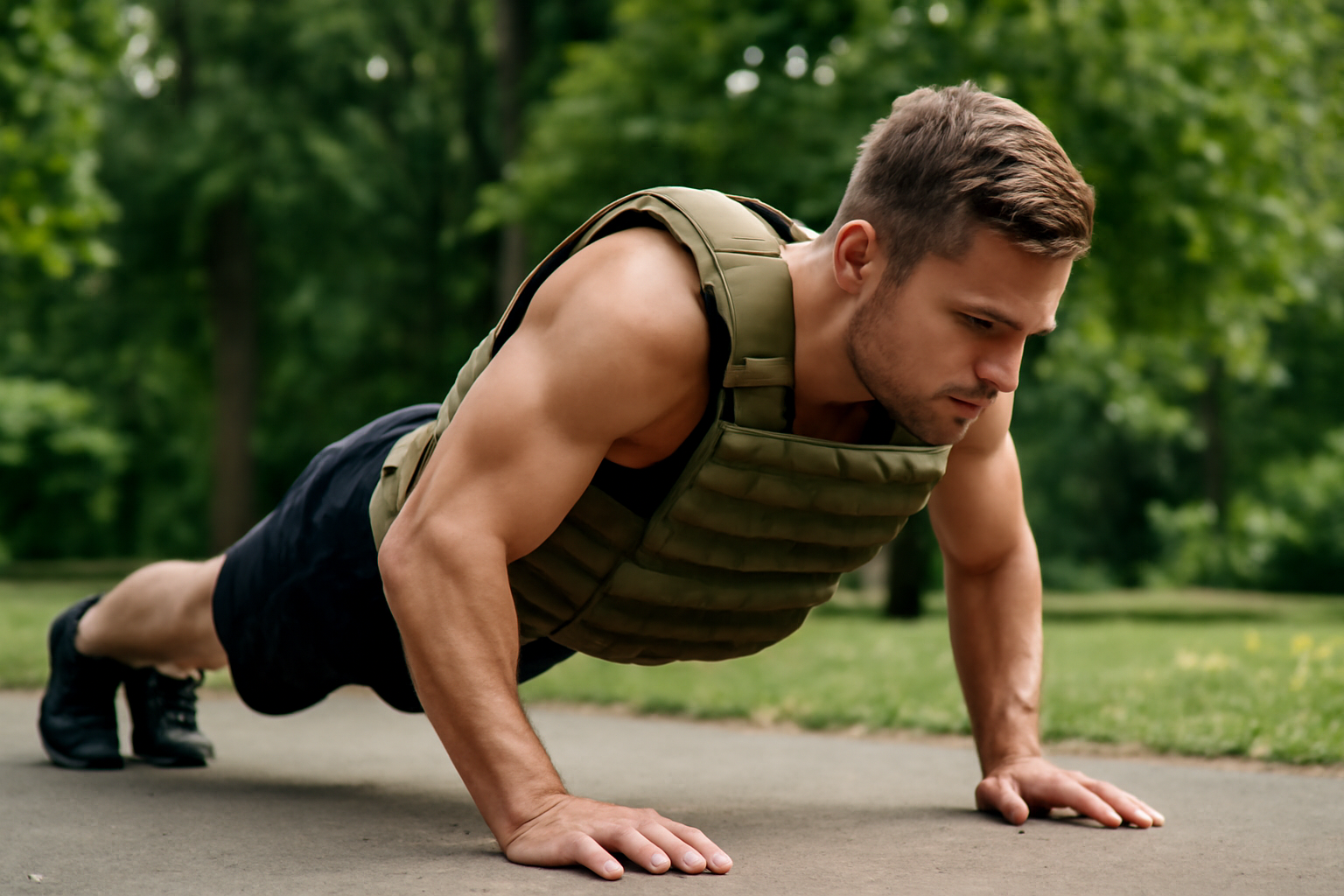
My circuit was three rounds, minimal rest. Push-ups were 3 sets of 15 at 11 lbs, progressing to 3 sets of 12 at 20 lbs. The added load noticeably shifted the challenge from muscular endurance toward raw strength. Lunges went from 3 sets of 16 reps per leg at 11 lbs to 3 sets of 12 per leg at 20 lbs — with a measurable burn difference I could feel in my quads and glutes by rep 8.
Bear crawls were the most interesting test. At 20 lbs, a 20-meter bear crawl became genuinely taxing. My heart rate spiked to 158 bpm mid-crawl, compared to around 132 bpm without the vest. That’s a meaningful cardiovascular difference from the same movement at the same pace.
What Actually Changed After 6 Weeks
Let me give you the honest numbers. My average walking pace held steady at 3.4 mph while wearing 20 lbs. That surprised me — I expected more slowdown at full load. Average heart rate during walks increased from 108 bpm in week one to 127 bpm in week six, even at similar paces. That’s a real uptick in cardiovascular demand with zero additional time investment.
Body composition changes were subtle but present. I lost approximately 4 lbs over the six weeks while eating at maintenance. My push-up max (without the vest, tested weekly) improved from 34 reps to 41 reps. That’s a 20% improvement in 42 days — driven largely by the accumulated volume of weighted push-up work.
My lower-body endurance also improved noticeably. Step-up sets that felt moderately hard in week one felt comfortable by week five. As a result, I added a fourth set during the final two weeks to maintain the challenge. That’s the power of progressive overload in action — exactly what I predicted, but still satisfying to see confirmed.
The Moment I Doubted the Vest
Full honesty: around day 19, I had a rough session. I’d loaded the full 20 lbs too aggressively after a poor sleep night. My lower back felt fatigued — not injured, but overworked — halfway through my walk. I backed off to 15 lbs for two days and reassessed.
The lesson wasn’t that the vest was bad. The lesson was that progressive overload still requires recovery. Jumping weight increments too fast with a loaded vest is the same mistake people make on the barbell. That said, the vest itself performed fine — the issue was my programming decision, not the equipment.
The Downsides You Should Know About
No piece of gear is perfect. Here’s what I didn’t love about the ExtreSpo Adjustable Weighted Vest for Women and Men, 11-20lb Weight Vest with 6 Ironsand Weights, Body Weight Vest Exercise Set with Reflective Strip after six weeks of daily use:
- Heat retention: The neoprene material traps body heat. During warmer sessions, I was noticeably hotter than without the vest. It’s manageable in cool weather, but it becomes uncomfortable above 75°F.
- Upper weight ceiling: 20 lbs is the max. For experienced lifters or heavier athletes, that ceiling will be reached quickly. If you’re already training seriously and want a vest that goes to 30+ lbs, this won’t serve you long-term.
- Not ideal for running: I attempted two short jogs at 11 lbs. The vest shifted slightly at running pace in a way it never did during walks or circuits. It’s designed for walking and training — not running.
- Weight packet adjustment: Adding or removing individual packets mid-session is slightly fiddly. It’s a minor inconvenience, but worth knowing if you plan to hot-swap weights between exercises.
None of these are dealbreakers for the target use case. However, they’re real limitations worth understanding before you buy.
Weighted Vest Workout Walking Review: Final Verdict
After six weeks and 42 sessions, my verdict is clear. The ExtreSpo Adjustable Weighted Vest for Women and Men, 11-20lb Weight Vest with 6 Ironsand Weights, Body Weight Vest Exercise Set with Reflective Strip for Strength Training and Workout is genuinely good gear for a specific audience. It delivers on its core promise — adjustable load, stable fit, and practical design for walking and bodyweight training.
Buy This If You Are:
- Someone who walks regularly and wants to increase intensity without running
- A beginner to intermediate trainee using bodyweight circuits who needs progressive overload
- A trainer looking for an affordable vest to recommend to clients in the 11–20 lb range
- An early-morning exerciser who values the reflective safety strip
- Anyone who wants adjustability without committing to a fixed weight
Skip This If You Are:
- An advanced athlete who needs 25–40+ lbs of resistance
- A runner looking for a vest that stays locked during higher-impact movement
- Training in consistently warm or humid conditions where heat buildup will be a serious issue
In my experience, this vest hits a sweet spot that few products at this price range manage: genuinely adjustable, well-built, and practical for real-world daily use. The cardiovascular data from my six-week test confirms it works. The push-up improvement confirms it builds strength. That’s a solid return on investment for a walking and bodyweight training tool.
Runner-Up Alternative: ZELUS Weighted Vest
If the ExtreSpo’s 20 lb ceiling feels limiting, the ZELUS Weighted Vest is worth a look. It comes in fixed weights up to 30 lbs and features a similar reflective stripe design. The tradeoff is that fixed-weight vests don’t allow gradual progression — you’re committing to a single load. For beginners or intermediate users, that’s a disadvantage. For advanced trainees who already know their target weight, however, the ZELUS offers a heavier ceiling and a clean, simple design. It’s a solid vest in its own right, just serving a slightly different need.
For most people reading this, though, the adjustability of the ExtreSpo makes more long-term sense. Start light, progress smart, and let the data tell you when to add more weight. That’s how good training always works.