When I was running track in high school, our coach had one answer for everything: “run more miles.” It took me years to realize how wrong that approach was — and even longer to see I was making the exact same mistake in the weight room, bouncing between a dozen isolation machines and wondering why my progress had completely stalled. If your program feels scattered, if you’re grinding away at cable flyes and leg extensions but not actually getting stronger, the fix isn’t more exercises — it’s the right ones. The squat, deadlift, bench press, and barbell row aren’t just movements; they’re the foundation of nearly every serious strength program ever written, and once you commit to building around them, the results have a way of speaking for themselves.
This post contains affiliate links. As an Amazon Associate, I earn from qualifying purchases. This means if you click a link and make a purchase, I may earn a small commission at no extra cost to you. I only recommend gear I genuinely believe in.
What Are the Big 4 Compound Lifts and Why Do They Matter?
A compound lift is any movement that works multiple muscle groups and joints at the same time. Compare that to an isolation exercise like a bicep curl, which only targets one muscle. The big 4 compound lifts — squat, deadlift, bench press, and barbell row — recruit massive amounts of muscle tissue simultaneously, which means more strength, more muscle, and more calories burned per rep. Research consistently shows that multi-joint, compound movements produce superior hormonal responses (think testosterone and growth hormone) compared to isolation work. Simply put, they give you the most return on your investment of time and energy in the gym.
Let me break down each lift so you know exactly what you’re working and why it belongs in your routine.
The Squat: King of Lower Body Strength
The barbell back squat works your quads, hamstrings, glutes, core, and even your upper back. It’s a full-body movement disguised as a leg exercise. Squatting heavy and consistently builds powerful legs and hips, improves athletic performance, and develops the kind of core stability that carries over to everything else in life — from carrying groceries to sprinting. Whether you go low-bar or high-bar, the squat is non-negotiable if you want to build a strong, athletic body.
The Deadlift: Total-Body Power in One Pull
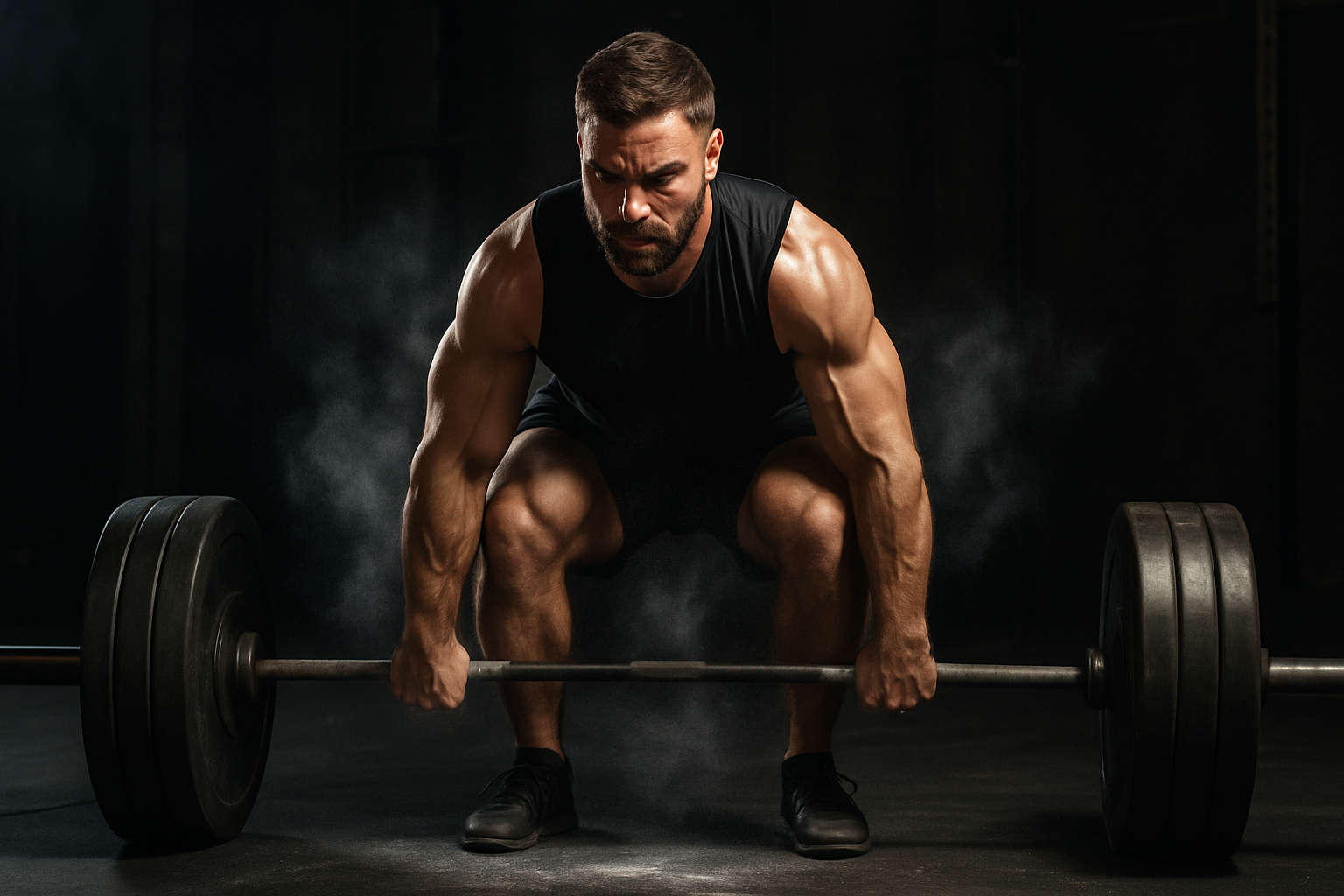
The deadlift might be the single most effective exercise in existence. You’re pulling a loaded barbell from the floor using your hamstrings, glutes, lower back, traps, lats, forearms, and core — all at once. It builds raw, functional strength that transfers directly to real-world movements. It also has an incredible ability to pack on muscle across your entire posterior chain (the muscles running down the back of your body), which is an area most gym-goers dramatically neglect. One thing to note: proper setup and bracing technique is critical on the deadlift. Never rush it.
The Bench Press: Upper Body Pushing Strength
The bench press is the gold standard for upper body pushing strength. It trains your chest (pectorals), front shoulders (anterior deltoids), and triceps simultaneously. When programmed correctly with progressive overload — meaning you’re gradually adding weight or reps over time — the bench press builds a thick, powerful chest and strong pressing muscles that support shoulder health and athletic performance. Don’t skip leg drive and proper arch technique here; bench pressing is more of a full-body movement than most people realize.
The Barbell Row: The Pull That Completes the Picture
The barbell row is the most underrated of the big four, and that’s a shame. Rowing heavy builds your lats, rhomboids, rear deltoids, traps, and biceps — all the muscles responsible for pulling strength and healthy posture. It also directly balances out the bench press, which is essential for keeping your shoulders healthy long-term. If you bench press and don’t row, you’re building an imbalance that’s going to catch up with you. Add heavy rows and watch your bench press improve, your posture improve, and your back thickness explode.
How to Build Your Program Around These Lifts
You don’t need a complicated program. In fact, simplicity is your best friend when you’re building strength. Here’s a simple framework that works for beginners and intermediate lifters alike:
- Train 3–4 days per week — Your body needs recovery time to get stronger. More is not always better.
- Lead every session with one of the big 4 — Do your compound lift first, when you’re fresh and mentally sharp.
- Work in the 3–5 sets of 3–8 rep range for strength and muscle, using progressive overload each week.
- Add accessory work after — Isolation exercises like curls, tricep work, or leg curls are fine, but they’re the side dish, not the main course.
- Track your lifts — You can’t manage what you don’t measure. Keep a training log and aim to add a little weight or an extra rep each session.
Pair squats with rows on one day, and deadlifts with bench press on another. This way your pushing and pulling muscles get balanced attention and you’re not overloading the same muscle groups back-to-back.
Gear I Recommend for the Big 4 Lifts
You don’t need a ton of equipment to get strong, but a few quality pieces of gear will make a meaningful difference in your performance and safety — especially as the weights get heavier. Here’s what I personally recommend:
Lifting Belts for Squats and Deadlifts
A good lifting belt is one of the best investments you can make once you’re moving serious weight. It doesn’t do the work for you — instead, it gives your core something to brace against, which increases intra-abdominal pressure and protects your spine under heavy loads. I recommend two options depending on your preference:
The Beast Power Gear Lever Buckle Lifting Belt (10MM) is a fantastic choice for lifters who want a quick-release lever buckle with a thick, supportive build. The lever system means you can get a consistent, tight fit every single set without fumbling with a prong. They also offer a 13MM version for those who want maximum rigidity during heavy powerlifting-style work. If you’re pulling and squatting heavy, this level of support is worth it.
Another excellent option is the IBRO Powerlifting Lever Gym Belt — a 10MM genuine leather belt built to IPF (International Powerlifting Federation