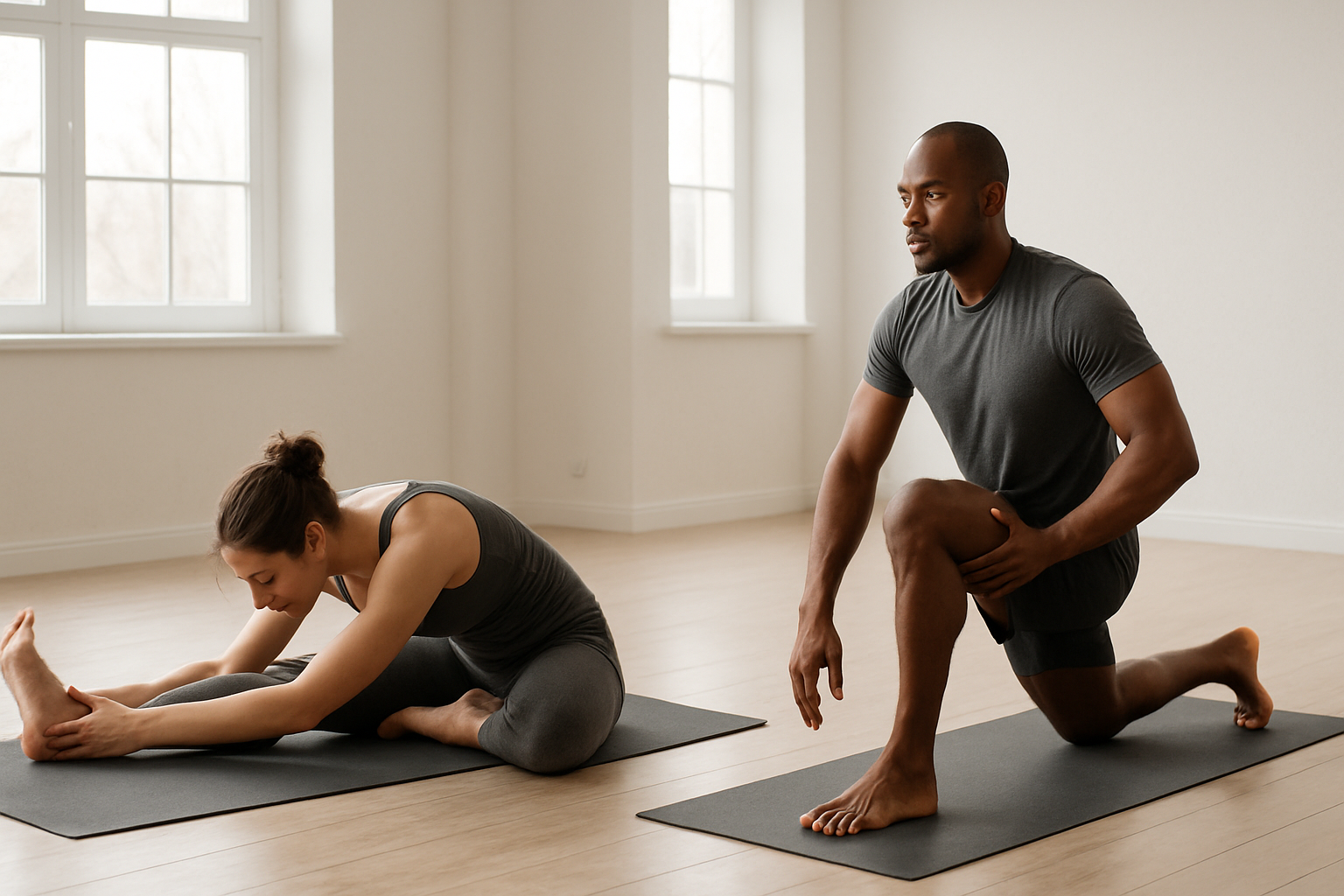
For about three years in my early twenties, pickup basketball on Sunday afternoons was my main form of exercise — and trying to keep up with guys ten years younger forced me to actually learn how training works. I’d watch teammates drop into deep defensive stances and explode out of them effortlessly, while I was constantly stiff, slow off the mark, and nursing a nagging hip that never quite felt right despite spending ten minutes stretching before every game. It took an embarrassingly long time to realize my problem wasn’t that I lacked flexibility — it was that I had almost no mobility. If you’ve ever wondered why you still feel stiff, achy, or limited in your movements even after months of consistent stretching, understanding the flexibility vs. mobility training difference might be the exact missing piece in your fitness puzzle. These two terms get tossed around like they mean the same thing, but they don’t — and knowing the distinction can completely change how you train, recover, and move through daily life.
This post contains affiliate links. As an Amazon Associate, I earn from qualifying purchases. This means I may earn a small commission if you click through and make a purchase — at no extra cost to you. I only recommend products I genuinely think are worth your time and money.
Flexibility vs Mobility Training Difference: Let’s Break It Down
Let’s start with the basics so we’re all on the same page.
Flexibility refers to the ability of your muscles and connective tissues to lengthen passively. Think of it as how far a muscle can be stretched when an outside force — gravity, a strap, another person — is applied. When you hold a static hamstring stretch on the floor, you’re working on flexibility. Your muscle is being lengthened, but your body isn’t necessarily doing the work to get there.
Mobility, on the other hand, is about how well a joint moves through its full range of motion — actively, under your own muscle control. It’s not just whether your hip can get into a certain position, but whether you have the strength and neuromuscular control to move it there and hold it on your own. Mobility is functional. It’s what actually shows up in your squats, lunges, overhead presses, and everyday movements like bending down to pick something up.
Here’s the key distinction: you can be flexible without being mobile, but you can’t be truly mobile without a base of flexibility. A dancer might have incredible passive flexibility — they can be pushed into a full split — but if they don’t have the active strength to control that range, they’re at a higher risk of injury. Flexibility without mobility is like having a wide road with no guardrails.
Why Most People Only Train One (And Why That’s a Problem)
The fitness world tends to put stretching in a box labeled “cool-down” and leaves it at that. Static stretching after a workout? Good habit. But if that’s the only work you’re doing for your range of motion, you’re leaving a massive gap in your training.
Research published in the Journal of Human Kinetics has shown that while static stretching improves passive range of motion, it doesn’t necessarily translate to improved active joint control. That’s why someone can touch their toes in a stretch but still can’t hit depth in a squat or perform a pain-free hip hinge. The muscle can be lengthened passively, but the nervous system hasn’t been trained to own that range actively.
Common signs you’re neglecting mobility work include:
- Tight hips that limit your squat depth
- Shoulder stiffness that affects your pressing and pulling movements
- Lower back pain during or after workouts
- Feeling “flexible” in stretches but stiff during actual exercise
- Recurring minor injuries in the same joints
If any of those sound familiar, it’s time to be more intentional about training both sides of the equation.
How to Train Flexibility and Mobility Together
The good news? You don’t need a completely separate workout to address both. You just need to be strategic about the types of stretching and movement work you’re doing.
For Flexibility: Use Static and PNF Stretching
Static stretching — holding a position for 20 to 60 seconds — is still one of the most effective ways to increase muscle length over time. PNF stretching (Proprioceptive Neuromuscular Facilitation), where you contract and relax the muscle while in a stretched position, is even more effective and is widely used in physical therapy settings. A stretching strap is one of the best tools you can own for both of these techniques because it lets you isolate specific muscle groups safely and progressively without needing a partner.
For Mobility: Use Dynamic Movement and Active Range Work
Mobility training involves moving through ranges of motion under your own control. Think hip circles, leg swings, thoracic rotations, deep squat holds with active engagement, and controlled articular rotations (CARs). These movements teach your nervous system to own the range your muscles are capable of reaching. Include these as part of your warm-up — dynamic mobility work before training is far more effective at preparing your body than static stretching alone.
A solid weekly plan might look like this: dynamic mobility work before every session (5 to 10 minutes), and dedicated static stretching on rest days or after training (10 to 20 minutes). Consistency over weeks and months is what moves the needle — not one marathon stretching session after a stressful Monday.
Gear I Recommend for Flexibility and Mobility Training
You don’t need a fully equipped gym to build serious flexibility and mobility. A quality stretching strap is honestly one of the most versatile and underrated tools out there. Here are a few I recommend depending on your style and budget:
The Abiarst Stretching Strap is a solid go-to. It features 10 loops for adjustable positioning, which makes it great for targeting different muscle groups with precision — especially useful for hamstrings, quads, and hip flexors. It’s non-elastic by design, which is actually what you want for controlled static and PNF stretching. No bounce, just a clean, stable hold.
If you want something with a bit more polished presentation — especially if you’re buying as a gift or just like your gear to look sharp — the Trideer Stretching Strap comes in aesthetic packaging and works equally well. It’s a non-elastic, 10-loop band that works for home workouts, Pilates, gymnastics, and physical therapy routines. Great for men and women who want a clean, functional tool that doesn’t look like it came out of a hospital supply closet.
Another excellent option is this purple stretching strap with a built-in workout guide. If you’re newer to flexibility training and aren’t sure how to use a strap effectively, having a