When I first signed up for a gym at nineteen, I had no idea what I was doing — I spent the first three weeks just doing bicep curls and treadmill because everything else looked too complicated. Eventually I worked up the courage to try ab exercises, and like most beginners, I went straight for crunches and leg raises, grinding through set after set and wondering why my lower stomach never seemed to change no matter how hard I worked. It wasn’t until years later that I learned the uncomfortable truth: most people doing “lower ab exercises” are really just training their hip flexors, and the actual lower portion of the rectus abdominis — that vertical muscle running down the front of your stomach — barely gets touched. In this post, I’m breaking down exactly why that happens and, more importantly, which exercises genuinely challenge the lower abs without letting your hip flexors steal the show.
This post contains affiliate links. As an Amazon Associate, I earn from qualifying purchases. This helps keep the content on WorkoutAnswers.com free — and I only recommend gear I’d actually use myself.
Why Your Lower Abs Are So Hard to Isolate
Here’s the anatomy truth bomb: there is no separate “lower ab muscle.” Your rectus abdominis is one continuous muscle — but the lower fibers are significantly harder to recruit because your hip flexors (the iliopsoas and rectus femoris, specifically) are always eager to take over during any movement that involves lifting your legs. When your hip flexors dominate, your lower abs barely fire. You end up with a sore front of the hip and nothing happening in your core.
The key to targeting the lower rectus is pelvic movement. Instead of pulling your legs toward your torso, you want to focus on tilting or curling your pelvis upward — a movement called a posterior pelvic tilt. When you do that, the lower fibers of your rectus abdominis have to contract hard. That shift in focus changes everything.
Lower Ab Exercises Effective Enough to Actually Make a Difference
Let’s get into the good stuff. These are the moves I program for clients when we want to specifically target the lower abdominal region. Each one emphasizes pelvic control over hip flexor dominance.
1. Dead Bug (With Intention)
The dead bug gets dismissed as too easy, but when you do it right, it’s one of the most effective lower ab exercises out there. Lie on your back, arms straight up toward the ceiling, knees bent at 90 degrees in the air. Press your lower back completely into the floor — that’s your posterior pelvic tilt — and hold it there. Now slowly lower one heel toward the floor while extending the opposite arm overhead. The goal is to maintain that flat lower back the entire time. If your back arches, you’ve lost the ab engagement. Start with 3 sets of 6 reps per side.
2. Reverse Crunch
This is the classic lower ab move, and it works — but only when done correctly. Lie flat, hands under your glutes for support, legs raised to 90 degrees. From here, use your abs to curl your hips off the floor, bringing your knees toward your chest. The movement should be small and controlled — you’re not swinging your legs, you’re curling your pelvis. Lower slowly. Three sets of 12–15 reps done with full control beats 30 sloppy reps every time.
3. Hanging Knee Raises (With a Pelvic Curl)
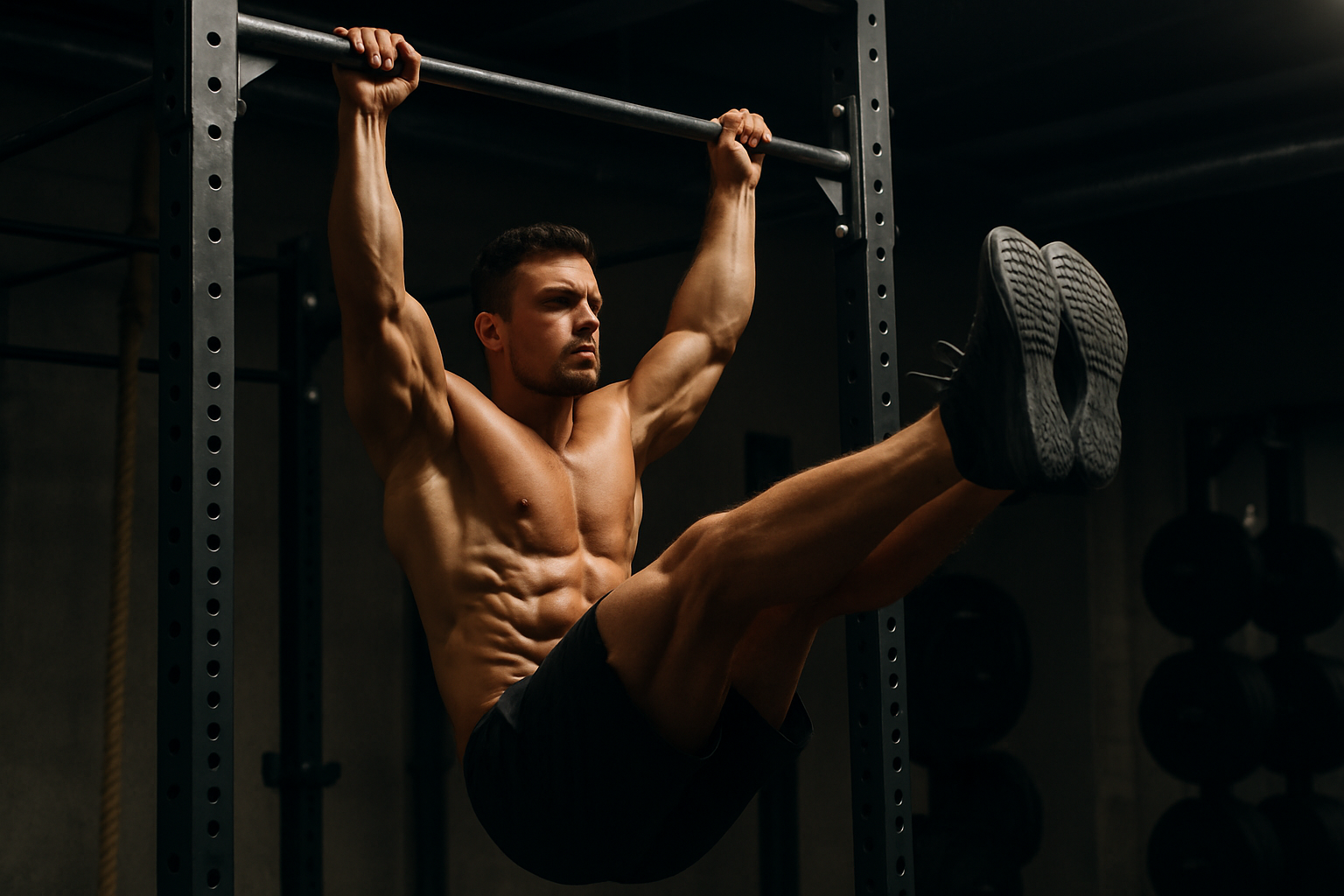
This is where a pull-up bar and ab straps become absolute game-changers. Hanging knee raises that end with a posterior pelvic tilt — where you curl the hips under at the top — are one of the most direct ways to load the lower rectus. Hang from a bar, draw your knees up to hip height, and then at the top, think about tucking your tailbone toward your belly button. That final curl is everything. Without it, you’re just doing a hip flexor drill.
4. Ab Wheel Rollout (From Knees)
When your hips are locked in a posterior tilt and you roll the wheel out slowly, the lower abs have to work overtime to prevent your lumbar spine from collapsing into extension. Start from your knees, brace hard, and only go as far as you can without losing that flat-back position. Rollouts train anti-extension — which is a core function your regular crunches completely miss.
5. Slider Pike or Tuck
Get into a plank position with sliders or socks on a smooth floor under your feet. From a strong plank, draw both feet toward your hands by curling your hips under — not by just hiking your butt in the air. Feel the difference? That hip curl is your lower abs doing their job. This is a brutal exercise when done right and a core staple in my programming.
Gear I Recommend for Lower Ab Training at Home
If you want to do hanging exercises — which are genuinely some of the best lower ab movements available — you need a solid pull-up bar and a good pair of ab straps. Here’s what I suggest:
- ALLY PEAKS Pull Up Bar — This thickened steel doorway bar handles serious weight and has multiple grip positions so you can adjust your hang angle. Solid build quality for the price, and it’s fully portable.
- KAKICLAY 2026 Upgrade Multi-Grip Pull Up Bar — USA patented design with smart large hooks that distribute weight evenly across your door frame. Great option if you want a more secure, upgraded bar with versatile grip positions.
- Iron Gym Pull Up Bar — The classic go-to for home gym setups. Adjustable width, no screws needed, and it gets the job done reliably for hanging ab work.
- DMoose Fitness Hanging Ab Straps — Thick, padded arm straps that attach to any pull-up bar with steel carabiners. These take your wrists and grip out of the equation so you can focus 100% on your ab contraction during leg raises and knee tucks.
- Hanging Ab Sling Straps — A budget-friendly alternative to the DMoose straps, still offering solid arm support for knee raises and leg lifts. Great for beginners just getting into hanging core work.
Pairing a reliable doorway bar with a set of ab sling straps is