This post contains affiliate links. As an Amazon Associate, I earn from qualifying purchases at no extra cost to you.
Three months ago, I was standing in the squat rack at 87% of my one-rep max, and something felt off. My brace was inconsistent. My lower back was taking more beating than it should. After 15 years of coaching and training, I knew the problem wasn’t technique. I needed better feedback from my equipment. That search led me straight into a deep dive on lifting belt squat reviews — and eventually to the SBD 13mm Powerlifting & Weight Lifting Belt.
I’ve owned four different belts over the years. Some were cheap lever belts that broke within a year. Others were overpriced tapered designs that never fit my torso properly. None of them gave me the consistent intra-abdominal pressure feedback I was chasing at heavier loads. My clients were asking me which belt to buy, and honestly, I was embarrassed that I didn’t have a confident answer.
So I committed to a proper 3-month test. Real sessions, real weights, real notes. Here’s everything I found out.
Why I Chose the SBD 13mm Belt Over Everything Else
Choosing a belt isn’t simple when you know what to look for. I narrowed my shortlist to four options. Two were well-known American brands. One was a budget lever belt from a European supplier. The fourth was the SBD 13mm Powerlifting & Weight Lifting Belt – British Manufactured Gym Belt for Squats, Deadlifts & Strength Training Lever Weight Lifting Belt.
SBD’s reputation in the powerlifting community is hard to ignore. Their equipment is IPF-approved. Multiple national-level lifters I know personally swear by the brand. That kind of word-of-mouth from people who actually compete carries more weight with me than any sponsored post.
Specifically, the 13mm thickness was the key decision point. I train in the 85–95% intensity range regularly. At that level, you want maximum rigidity and support. A 10mm belt is excellent for general strength training and even competition prep at lower weight classes. However, for my build and my training load, 13mm made more sense as the primary tool.
The lever mechanism also mattered. Prong belts are fine, but lever belts allow for consistent tightness rep after rep. That repeatability is something I preach to my clients constantly. Your setup should be identical every single set. A lever makes that possible.
First Impressions: Build Quality and Fit Out of the Box
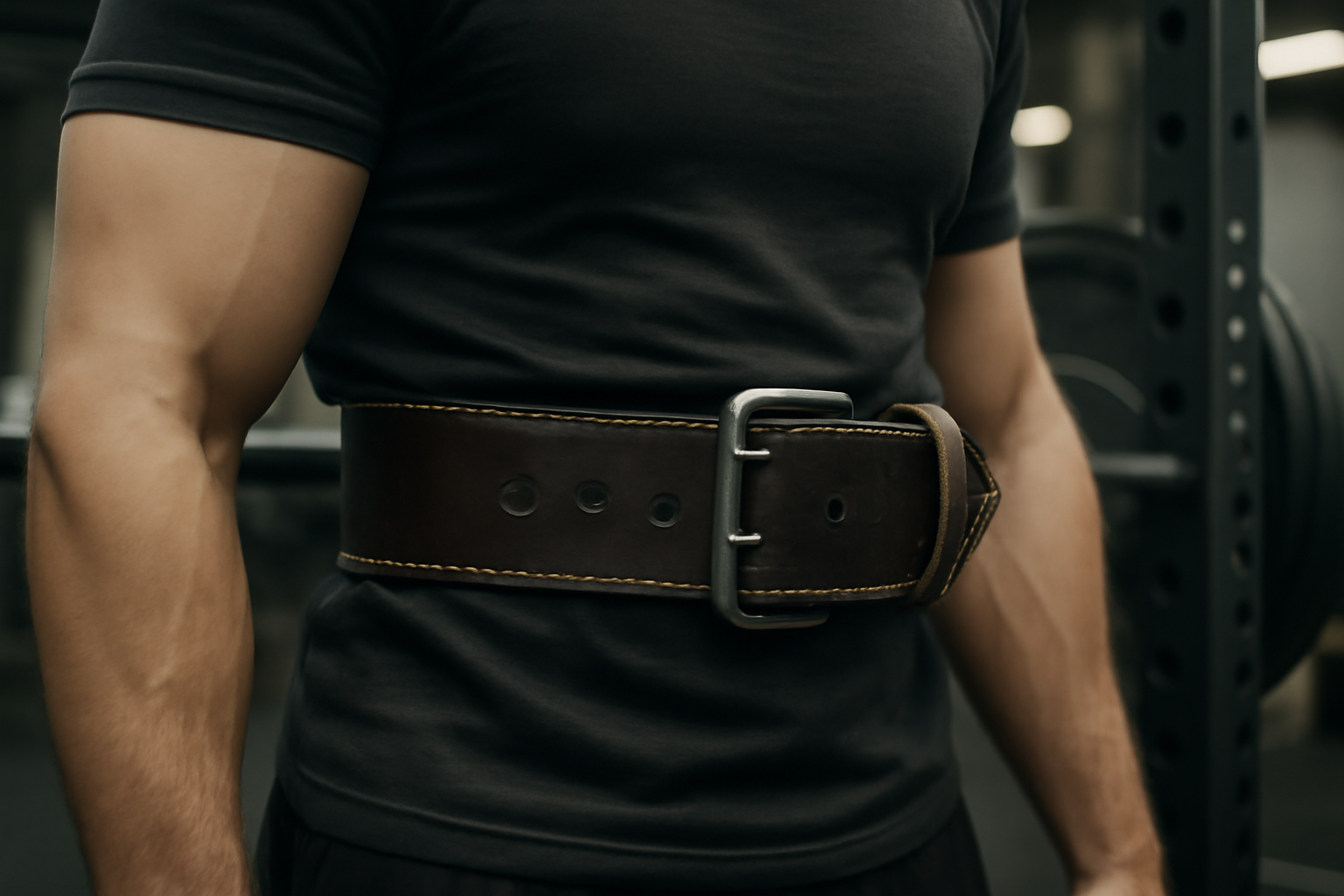
When the belt arrived, the first thing I noticed was the leather. It was stiff — noticeably stiffer than any belt I’ve owned before. That’s expected with premium 13mm leather, but it’s worth flagging. This belt requires a break-in period, and that’s not marketing copy. It’s real.
The stitching is immaculate. Even rows, no fraying, no loose threads anywhere. The lever hardware felt solid and heavy. Clicking it into place had a satisfying, mechanical finality to it. You can tell immediately this is not a mass-produced budget product.
Sizing was straightforward. I measured my waist at the navel and landed squarely in a size large. The fit was snug but not uncomfortable on the first wear. In my experience, SBD’s sizing chart is accurate — trust the measurements, not your intuition about what “large” means.
The uniform 10cm width around the entire belt was immediately noticeable. No taper in the front. That design choice is intentional and directly impacts how you brace. More on that in the results section.
Break-In Timeline
Sessions one through four felt stiff and slightly awkward. By session six, the leather had begun to conform to my torso. Around the two-week mark, it started to feel like a natural extension of my setup. Full comfort arrived somewhere between week three and week four. That timeline matters if you’re planning to use it for a meet or a max effort day soon after purchase.
How I Tested It: My 3-Month Protocol
I run a modified conjugate-influenced program four days per week. My testing covered two primary periods: a hypertrophy-focused block and a strength-focused peaking block. That gave me exposure across a wide intensity range.
Here’s how the belt was used across those 12 weeks:
- Back squats: 3–5 sets, intensities ranging from 70% to 95% of 1RM, including top sets of 5, 3, and 2 reps
- Romanian deadlifts: 4 sets of 6–8 reps at moderate load (around 60–70% of deadlift max)
- Conventional deadlifts: 3–4 sets, intensities from 75% to 92% of 1RM
- Belt squats (machine): Accessory work, 3 sets of 10–12 reps
- Good mornings: 3 sets of 8 reps at 40–50% of squat max
I logged every session. I tracked perceived exertion, lower back fatigue, and whether my brace felt consistent across sets. I also noted any discomfort, rubbing, or hardware issues. Over 12 weeks, that was approximately 36 lower-body sessions with the belt present for at least some portion of each workout.
What I Was Specifically Measuring
My primary focus was squat performance. Specifically, I wanted to know whether the belt improved my bracing consistency, reduced post-session lower back fatigue, and allowed me to handle heavier loads more confidently. Secondary focus was on deadlift comfort and lever durability over time.
What Actually Changed: Honest Results From a Lifting Belt Squat Review
The single biggest change was bracing feedback. The uniform 10cm width pressing against my core from all sides — front and back — gave me a wall to brace into. That sensation is difficult to explain if you’ve only used tapered belts. It’s like the difference between pressing against a firm surface versus a soft one.
My top-set squat went from 185kg to 192.5kg over the 12 weeks. That’s not entirely attributable to the belt. Program progression played a role. However, the technical improvement in my brace at 90%+ intensity was real and observable on video. My torso stayed more vertical on heavy attempts. Lower back fatigue on squat day dropped noticeably by week six.
On deadlifts, the rigidity was even more apparent. At 92% intensity, I felt locked in during the setup in a way I hadn’t experienced with previous belts. The lever made my positioning identical on every single attempt. No more fiddling between sets.
Post-session soreness in my erectors decreased across the board. That’s meaningful data. It suggests the belt was doing its job — distributing load more effectively and reducing spinal stress during peak effort.
A Moment of Doubt
Around week five, I had one session where the lever felt slightly loose after a heavy squat. I stopped mid-set to reset it. That was unsettling. On closer inspection, the lever screw had vibrated slightly loose over time. A small adjustment with a screwdriver fixed it permanently. It hasn’t moved since. That said, it’s worth checking that screw every few weeks as standard maintenance.
The Downsides You Should Know Before Buying
No product review is honest without real negatives. Here are the ones that matter.
The break-in period is real and slightly annoying. If you need a belt for heavy lifting in the next two weeks, buy something else first and come back to this one. You will not enjoy your first few sessions with a stiff 13mm leather belt at high intensity.
The price is premium. This is not a budget buy. For recreational gym-goers squatting two or three times per week at moderate loads, the cost-to-benefit ratio may not justify it. In my experience, you need to be training consistently at 80% or above for a belt at this price point to make real sense.
It’s not ideal for high-rep metabolic work. Wearing a rigid 13mm lever belt for sets of 15 squats or conditioning circuits is cumbersome. The lever isn’t as quick to release as a prong, and the stiffness becomes uncomfortable during long-duration sets. For that type of training, a lighter, more flexible belt is the smarter choice.
Sizing is unforgiving. If you’re between sizes, this belt doesn’t have much adjustment range compared to prong designs. Measure carefully and contact SBD support if you’re genuinely between sizes. Getting this wrong is an expensive mistake.
Final Verdict: Who Should Buy This Belt — and Who Should Skip It
After 12 weeks and dozens of sessions, my conclusion is clear. The SBD 13mm Powerlifting & Weight Lifting Belt – British Manufactured Gym Belt for Squats, Deadlifts & Strength Training Lever Weight Lifting Belt is one of the best pieces of training equipment I’ve used in 15 years of coaching. For serious strength athletes, it delivers exactly what it promises.
This is a complete lifting belt squat review conclusion: if you squat and deadlift heavy regularly — meaning 80% or above, multiple times per week — this belt will improve your performance and your safety. The bracing feedback, lever consistency, and build quality are genuinely elite.
Buy It If:
- You compete in powerlifting or plan to
- You regularly train above 80% of your 1RM on squats or deadlifts
- You want a belt that will last 10+ years with proper care
- You value consistent, repeatable setup on every heavy set
- You’re willing to invest in equipment that genuinely performs
Skip It If:
- You’re a recreational lifter training at moderate intensities
- You primarily do high-rep, circuit-style, or conditioning workouts
- You need a belt immediately for an upcoming event — the break-in period is not optional
- Budget is a genuine concern right now
The Runner-Up: SBD 10mm Belt
If the 13mm feels like more belt than you need, take a serious look at the SBD 10mm Powerlifting & Weight Lifting Belt – British Manufactured Gym Belt for Squats, Deadlifts & Strength Training Lever Weight Lifting Belt. Same British-made quality and lever design. Slightly more flexible feel straight out of the box. The break-in period is shorter, and it suits lighter weight classes or lifters who prefer a less rigid feel during their training.
In my view, the 10mm is the right call for intermediate lifters or anyone who wants SBD quality without committing to the full stiffness of a 13mm. It’s also a smart option if you train across a wider rep range and need the belt to feel comfortable during higher-volume work. As a runner-up, it’s an excellent belt in its own right. However, for max-effort strength work, the 13mm remains the top choice.