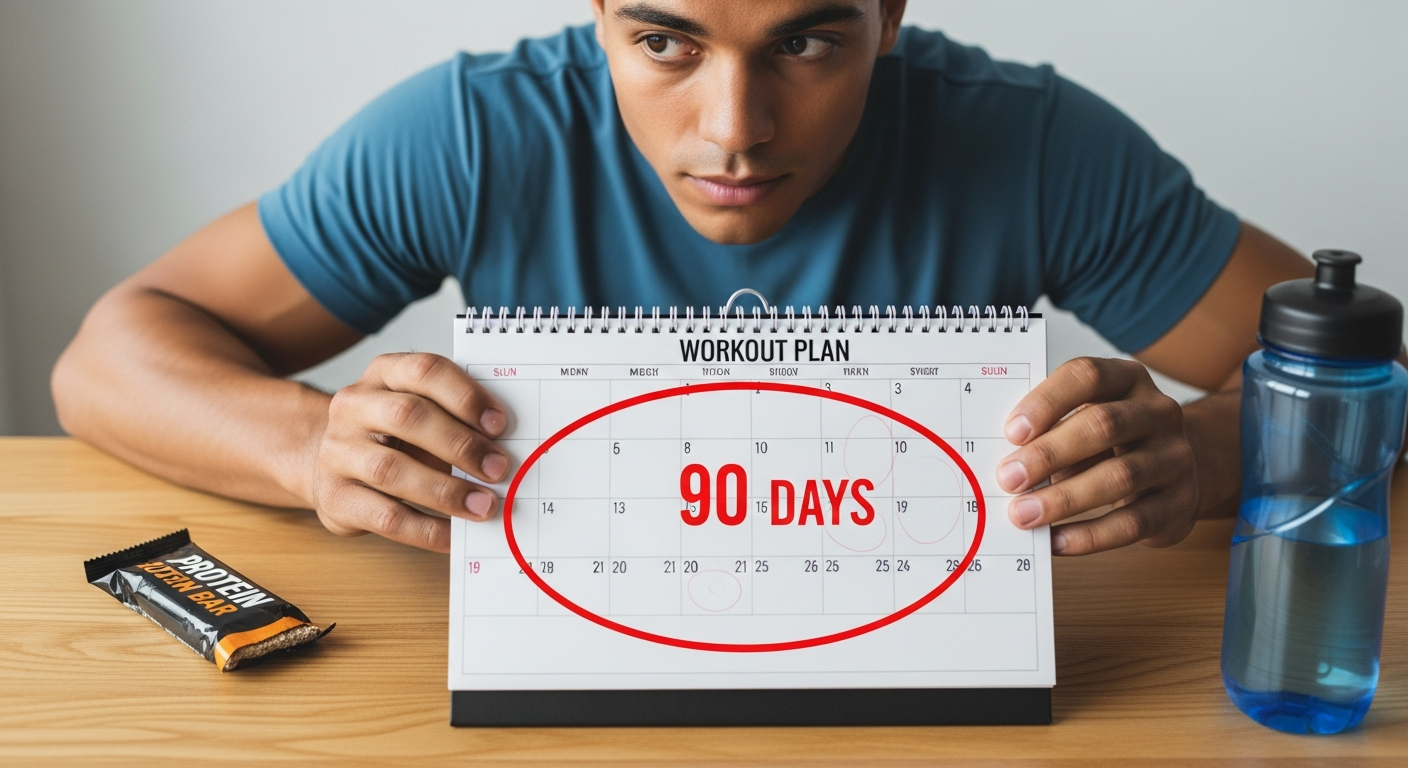
When I first signed up for a gym at nineteen, I had no idea what I was doing — I spent the first three weeks just doing bicep curls and treadmill because everything else looked too complicated. What I really needed back then was someone to hand me a plan and tell me exactly what to do, which is exactly why programs like P90X exploded in popularity when they hit the scene. Tony Horton’s no-nonsense promise — 90 days, extreme effort, best shape of your life — gave millions of people the structure and confidence they were desperately searching for, and it turned home fitness into a cultural phenomenon almost overnight. But the fitness world has changed dramatically since those late-night infomercials, and with streaming workouts, smart equipment, and on-demand HIIT sessions now competing for your attention, it’s worth asking: does P90X still have a place in your routine today?
What I Recommend
If you’re doing P90X or any bodyweight program at home, a doorway pull-up bar is non-negotiable. Pull-ups are one of the best upper body exercises you can do, and having a bar installed takes zero floor space. I’ve had mine up for years and it’s held up perfectly under heavy training.
Resistance bands deserve a spot in every home gym, especially if you want to add progressive overload to bodyweight routines. A quality resistance bands set gives you multiple tension levels and can be combined for serious resistance. They’re portable, durable, and way more affordable than most equipment.
For anyone serious about strength gains at home, adjustable dumbbells are worth the investment. They replace an entire rack of traditional dumbbells and let you dial in exact weight increments for compound movements like presses and rows. This is the one piece of equipment I’d never train without.
Push-up bars might seem like a gimmick, but they actually make a real difference in performance and safety. A solid set of push-up stands increases your range of motion and reduces wrist strain—both things that matter when you’re doing high-volume chest work like P90X demands.
You need a quality surface for floor work, stretching, and recovery routines. A thick, non-slip yoga mat protects your joints and gives you stable footing for core exercises. Mine’s been through hundreds of workouts and still looks new.
Yoga blocks and props are underrated tools for improving form and making exercises more accessible. I use them for everything from assisted pistol squats to better positioning in push-ups and planks. They cost next to nothing and fix more problems than people realize.
If you’re tracking conditioning and intensity like you should be, a heart rate monitor with chest strap keeps you honest about your effort levels. Knowing your actual heart rate versus guessing is the difference between wasted time and real cardiovascular gains.
Staying hydrated during intense home workouts is non-negotiable, and an insulated water bottle keeps your water cold for hours. It’s a small detail, but hydration directly affects performance and recovery, so make it convenient.
During longer, sweatier workouts like P90X, electrolyte replacement matters more than people think. An electrolyte powder keeps your energy stable and helps with recovery, especially on conditioning-heavy days. It’s one of the few supplements that actually makes a difference in real training.
Recovery tools separate serious trainees from casual exercisers. A foam roller for post-workout myofascial release reduces soreness and improves mobility between sessions. Spend 10 minutes on this after your workout and you’ll notice the difference in how you feel the next day.
If you want to take recovery seriously, a massage gun cuts down recovery time and hits muscle groups that a foam roller can’t reach as effectively. I use mine on my legs and back after heavy training days and it makes a real difference in soreness.
Nutrition tracking starts with accurate measurements, and a digital kitchen scale removes all the guesswork. If you want results, you need to know exactly what you’re eating, and this tool pays for itself in the first week.
To add serious progressive overload to bodyweight work, a weighted vest lets you increase the difficulty of push-ups, pull-ups, and cardio without new equipment. It’s one of the most effective ways to make home training harder as you get stronger.
Workout gloves aren’t essential, but they protect your hands during extended pull-up or dumbbell sessions. If you’re training regularly, they’ll save you from calluses and give you better grip security.
Your home gym equipment needs a place to live, and a compact equipment storage rack keeps everything organized and accessible. A messy gym is a gym you won’t use—keep your space tight and your motivation tight with proper storage.
As an Amazon Associate, I earn from qualifying purchases.
This raises an important question for anyone seeking a home workout solution. Is P90X still a relevant and effective choice? Or is it a relic from a bygone era? Let’s dive in and see how this classic program stacks up against modern alternatives.

What Made P90X a Game-Changer?
P90X, which stands for Power 90 Extreme, launched in 2005. It fundamentally changed how people approached working out at home. Previously, home fitness often meant simple aerobics tapes. P90X introduced a comprehensive and intense system. Its success hinged on a core principle called “Muscle Confusion.” The idea was simple but powerful. By constantly varying the workouts, you prevent your body from plateauing. This forces your muscles to adapt and grow continuously.
The program included 12 different workout DVDs. These covered everything from chest and back to plyometrics, yoga, and kenpo karate. Furthermore, it wasn’t just about exercise. P90X provided a detailed nutrition plan, a fitness guide, and a calendar to track your progress. This all-in-one approach created a structured path to results. It empowered people to take control of their fitness journey with a clear, day-by-day plan. For many, it was the first time a home program felt as serious and results-oriented as hiring a personal trainer.
The Modern Home Fitness Revolution
The world of home fitness has evolved dramatically since P90X’s peak. The rise of high-speed internet and smartphones created a new ecosystem. Today, fitness is on-demand, personalized, and connected. Streaming services like Peloton, Apple Fitness+, and Beachbody On Demand (now BODi) offer vast libraries of workouts. You can choose from thousands of classes across dozens of disciplines. This provides incredible variety that a 12-disc set simply cannot match.
Modern workouts also cater to busy lifestyles. Source Many popular programs focus on high-intensity interval training (HIIT). They promise great results in 30 minutes or less. This is a stark contrast to the typical 60- to 90-minute P90X session. Additionally, wearables like the Apple Watch and Fitbit track every metric. They sync with apps that personalize your fitness plan based on your real-time data. This data-driven approach offers a level of customization that P90X’s one-size-fits-all model lacks. The global digital fitness market reflects this shift, with experts projecting massive growth.
Enduring Strengths: Why P90X Still Works
Despite the new competition, P90X retains several powerful advantages. Its greatest strength is its structure. For individuals who feel overwhelmed by endless choices on streaming platforms, a finite 90-day plan is a blessing. The program tells you exactly what to do every single day. This eliminates decision fatigue and builds powerful momentum. You just have to press play.
One of the most compelling financial advantages of P90X is its status as a one-time purchase. Unlike the pervasive model of recurring subscriptions common across the modern fitness landscape, you invest in P90X once, and it becomes a permanent part of your fitness toolkit. This translates to significant long-term savings when you consider the cumulative costs of:
- Monthly gym memberships: These often range from $30-$100+ per month, frequently coupled with initiation fees, annual maintenance charges, and sometimes tricky cancellation policies.
- Fitness app subscriptions: Typically priced at $10-$30 per month (or $100-$250 annually), these recurring fees can quickly add up, often renewing automatically unless you actively cancel.
Over just a few years, these ongoing subscription costs can easily eclipse the initial investment in P90X. With P90X, there are no hidden fees, no automatic renewals, and no escalating prices. You own the content outright, granting you the freedom to revisit the program, repeat cycles, or adapt specific workouts into your routine years down the line without incurring any additional charges. This makes it an incredibly cost-effective and sustainable solution for sustained fitness, offering exceptional value and a tangible return on investment for those committed to their health journey.
*
Beyond the financial benefits, the comprehensive nature of P90X remains a foundational pillar of its enduring success. It’s not merely a collection of workout videos; it’s a meticulously designed ecosystem where every component works in precise harmony to maximize your results.
The Crucial Role of the Nutrition Guide
A prime example of this integration is the detailed nutrition guide. This isn’t just a generic meal plan or a simple calorie counter; it’s a sophisticated dietary roadmap specifically engineered to complement the intensity and demands of the P90X workouts. Key features and benefits include:
- Phase-Specific Eating Plans: Recognizing that nutritional needs evolve, the guide offers distinct strategies tailored for different phases of the program, such as initial fat loss, muscle building, and maintenance.
- Optimized Macronutrient Breakdowns: It provides clear guidance on the ideal balance of proteins, carbohydrates, and fats to effectively fuel your performance, accelerate recovery, and promote significant body composition changes.
- Practical Meal Ideas and Recipes: Eliminating guesswork, the guide offers actionable advice, sample menus, and easy-to-follow recipes that make healthy eating accessible, enjoyable, and sustainable.
- Education on Portion Control: It empowers users with crucial knowledge on appropriate serving sizes, a fundamental skill for managing calorie intake and achieving specific fitness goals.
This level of nutritional detail is absolutely paramount. As the adage goes, you simply cannot out-train a poor diet. The most intense and consistent workouts will yield suboptimal results if your body isn’t properly fueled for energy, muscle repair, and overall growth.
The Power of an Integrated Approach
This brings us to the core strength of P90X: its integrated approach to diet and exercise. Many standalone fitness apps or programs often present a fragmented solution, focusing almost exclusively on the exercise component and leaving users to navigate the complex and often confusing world of nutrition on their own. This common oversight can lead to:
- Confusion and Frustration: Users often struggle to align their eating habits with their training goals, leading to mixed messages and uncertainty.
- Stalled Progress: Without proper fuel, energy levels drop, recovery is impaired, and plateaus become common, leading to demotivation.
- Increased Risk of Burnout or Injury: Inadequate nutrition can compromise the body’s ability to cope with intense physical demands, making it harder to sustain the program and increasing susceptibility to injury.
P90X, however, understands that true, lasting transformation requires synergy. The challenging workouts break down muscle fibers and push your cardiovascular system, while the meticulously designed nutrition guide provides the essential building blocks and energy sources for repair, growth, and sustained high performance. This holistic strategy ensures that your body is not only pushed to its limits but also adequately supported to recover, adapt, and become stronger, leading to more profound, sustainable, and satisfying results that extend far beyond just looking good – you’ll feel better, stronger, and more energized from the inside out.
Notable Drawbacks in Today’s World
However, the very features that made P90X revolutionary can also be its biggest weaknesses today. The most significant barrier is the time commitment. Workouts are long, often exceeding an hour, six days a week. For busy professionals or parents, finding that kind of time consistently can be nearly impossible. This is a major reason why shorter, 30-minute workouts have become so popular.
The intensity of the program is another double-edged sword. While “extreme” workouts produce results, they also increase the risk of injury, especially for beginners or those with pre-existing conditions. Modern programs often offer more modifications and place a greater emphasis on safe progression. Finally, the production value can feel dated. Compared to the high-definition, studio-quality videos of today, the look and feel of P90X can be a bit jarring for new users.

P90X vs. The Alternatives: A Quick Comparison
How does P90X directly compare to its modern counterparts? Let’s break it down.
- P90X vs. Streaming Services (BODi, Peloton): Streaming platforms offer unparalleled variety and flexibility. You can switch between yoga, cycling, and strength training on a whim. P90X offers a single, focused, and finite path. If you want variety and community, streaming wins. If you want a structured, self-contained program with a clear end date, P90X holds its own.
The landscape of home fitness has dramatically evolved, with a pronounced shift towards optimizing every minute of a workout. While the original P90X program set a high bar for comprehensive, hour-long training sessions, the creators at Beachbody and other leading fitness innovators keenly observed a growing need for equally effective but significantly shorter alternatives. This recognition wasn’t just about market trends; it was a response to the realities of modern life.
The Driving Force Behind Shorter Workouts: Time Efficiency
The move towards programs like P90X3 and Insanity Max:30 stemmed from a critical insight: for many, the biggest barrier to consistent fitness isn’t a lack of desire or motivation, but a lack of time.
- Busy Lifestyles: Professionals, parents, and students often struggle to carve out a full 60-90 minutes (including warm-up, cool-down, and transitions) for a workout, especially on a daily basis.
- Increased Consistency: A shorter time commitment means workouts are easier to fit into tight schedules, leading to greater adherence and ultimately, better long-term results.
- Reduced Intimidation Factor: The prospect of an hour-plus workout can be daunting for beginners or those returning to fitness. A 30-minute session feels much more manageable and less overwhelming.
How 30-Minute Programs Deliver Maximum Impact
These shorter programs aren’t simply abbreviated versions of their longer predecessors; they are meticulously engineered for maximal efficiency. They leverage advanced training principles to condense the intensity and effectiveness into a compact timeframe.
- High-Intensity Interval Training (HIIT): Many 30-minute programs heavily rely on HIIT, alternating short bursts of intense anaerobic exercise with brief recovery periods. This method is incredibly effective for cardiovascular fitness, calorie burn, and boosting metabolism.
- Metabolic Conditioning: Workouts are designed to keep your heart rate elevated throughout, often minimizing rest between exercises. This continuous effort challenges both your muscular and cardiovascular systems simultaneously.
- Compound Movements: Exercises frequently engage multiple muscle groups at once (e.g., squats with overhead presses, burpees). This maximizes muscle activation and caloric expenditure in less time.
- Focus on Quality Over Quantity: There’s less emphasis on high repetitions or extended sets, and more on perfect form, explosive power, and pushing to your individual limits within each short interval.
P90X3: The Evolution of Muscle Confusion
P90X3 is a prime example of how Beachbody adapted its core philosophy of “Muscle Confusion” – constantly varying workouts to prevent plateaus – into a 30-minute format. It maintains the diverse range of disciplines found in the original P90X, including:
- Resistance Training: Condensed strength workouts like “The Challenge” or “Incinerator” pack a punch with compound moves and minimal rest.
- Cardio: Explosive routines such as “CVX” (Cardio, Velocity, X-Factor) combine cardio with resistance for a full-body metabolic blast.
- Plyometrics and Agility: Workouts like “Agility X” enhance speed, coordination, and power.
- Yoga and Pilates: Even flexibility and core strength are addressed efficiently in sessions like “X3 Yoga” and “Pilates X.”
The genius of P90X3 lies in its ability to deliver the same comprehensive approach to fitness, fostering strength, endurance, flexibility, and agility, all within a half-hour commitment.
Insanity Max:30: Pushing Your Limits in Under 30
Another standout in the efficient workout space is Insanity Max:30. This program takes the high-intensity, no-equipment philosophy of the original Insanity and distills it into 30-minute, all-out efforts. Its core principle is “Maxing Out” – going as hard as you can until you need to take a break, then recording that time and striving to beat it in subsequent workouts. This unique approach:
- Personalizes Progress: It’s not about keeping up with the trainer, but about constantly challenging your own limits.
- Guarantees Intensity: Every session pushes you to your physical edge, regardless of your starting fitness level.
- Focuses on Cardio and Endurance: Max:30 is a cardio powerhouse, designed to shred fat and build incredible stamina through relentless, dynamic movements.
Ultimately, the rise of these shorter, high-intensity programs reflects a crucial understanding: fitness doesn’t have to consume a large chunk of your day to be profoundly effective. For many, these efficient workouts are not just a convenient alternative, but the key to unlocking consistent results and sustainable fitness in their busy lives.
- P90X vs. AI-Powered Apps (Freeletics, Fitbod): Modern apps can create dynamic training plans that adapt to your feedback and performance. If you log that a workout was too easy, the app will adjust the next one. P90X is static. Day 30 is the same for everyone, regardless of individual progress or fitness level. This lack of personalization is a key difference.

The Verdict: Who Should Still Do P90X in 2024?
So, is P90X still relevant? The answer is yes, but for a specific type of person. P90X is no longer the king of home fitness, but it has gracefully transitioned into a respected classic. It remains an excellent choice for a particular audience.
You might be a great candidate for P90X if you:
- Thrive on structure and discipline. You want a clear plan to follow without having to make daily choices.
- Have the time to commit. You can consistently dedicate about an hour a day to your fitness.
- Are on a budget. You prefer a one-time purchase over a recurring monthly subscription.
- Are at an intermediate fitness level. You have some workout experience and are ready for a significant challenge.
In conclusion, P90X can still deliver incredible results. Its principles of intensity, consistency, and a well-rounded approach are timeless. However, it is no longer the only—or even the best—option for everyone. The modern fitness world offers more flexibility, personalization, and variety than ever before. The best workout program is ultimately the one you will stick with. For a select group of dedicated individuals, that program is still, and will continue to be, P90X.