When I was studying for my personal training certification, I thought textbooks would answer everything — then I started working with real people and realized the gap between theory and practice is enormous, and nowhere was that gap more obvious than when clients hobbled into the gym two days after leg day, barely able to descend a flight of stairs. That burning, stiff, almost-satisfying ache that shows up 24 to 72 hours after a tough session has a name: DOMS, or Delayed Onset Muscle Soreness. What I quickly learned is that understanding DOMS muscle soreness recovery is one of the most valuable things you can take away from any fitness education — whether you’re a brand-new gym-goer or a seasoned athlete chasing the next performance breakthrough. So let me share what the textbooks taught me, what my clients actually taught me, and how to separate the recovery tools that genuinely work from the ones that are pure hype.
This post contains affiliate links. As an Amazon Associate, I earn from qualifying purchases. If you click a product link and make a purchase, I may earn a small commission at no extra cost to you. I only recommend products I genuinely believe in.
What Is DOMS and Why Does It Happen?
DOMS stands for Delayed Onset Muscle Soreness, and it’s your body’s natural response to exercise — especially movements your muscles aren’t used to. Here’s the science without the textbook lecture: when you work out, you create tiny microscopic tears in your muscle fibers. This sounds alarming, but it’s actually the whole point. Your body repairs those tears and builds the fibers back slightly thicker and stronger than before. That’s how you get stronger over time.
The soreness itself is caused by inflammation, fluid buildup, and nerve sensitivity in the repaired tissue. It typically peaks around 48 hours post-workout, which is why you often feel fine right after training but wake up two mornings later barely able to lift your arms. DOMS is especially common after eccentric movements — the lowering phase of an exercise, like the descent in a squat or a bicep curl — because that’s when the muscle is under the most tension while lengthening.
The good news? DOMS is completely normal, and it actually signals adaptation. Your body is getting the message loud and clear: get stronger. The better news? You don’t have to just wait it out. There are real, proven tools that speed up the process.
DOMS Muscle Soreness Recovery: What Actually Works
Let’s cut through the noise. Some recovery methods are backed by solid research. Others are just fitness folklore. Here’s what genuinely helps:
Active Recovery
One of the best things you can do on a sore day is move — just not hard. Light walking, gentle cycling, or a slow yoga flow increases blood circulation to your muscles, which helps flush out inflammatory byproducts and deliver fresh oxygen and nutrients. Sitting completely still actually slows the process. Aim for 20 to 30 minutes of low-intensity movement the day after a tough session.
Hydration and Nutrition
Your muscles are literally rebuilding themselves — they need the raw materials to do it. Protein is the big one. Aim for 0.7 to 1 gram of protein per pound of bodyweight daily when you’re training consistently. Pair that with adequate carbohydrates to replenish muscle glycogen (your body’s stored fuel), and you’re giving your recovery engine everything it needs. Staying well-hydrated also reduces soreness duration — even mild dehydration impairs muscle repair.
Percussive Therapy (Massage Guns)
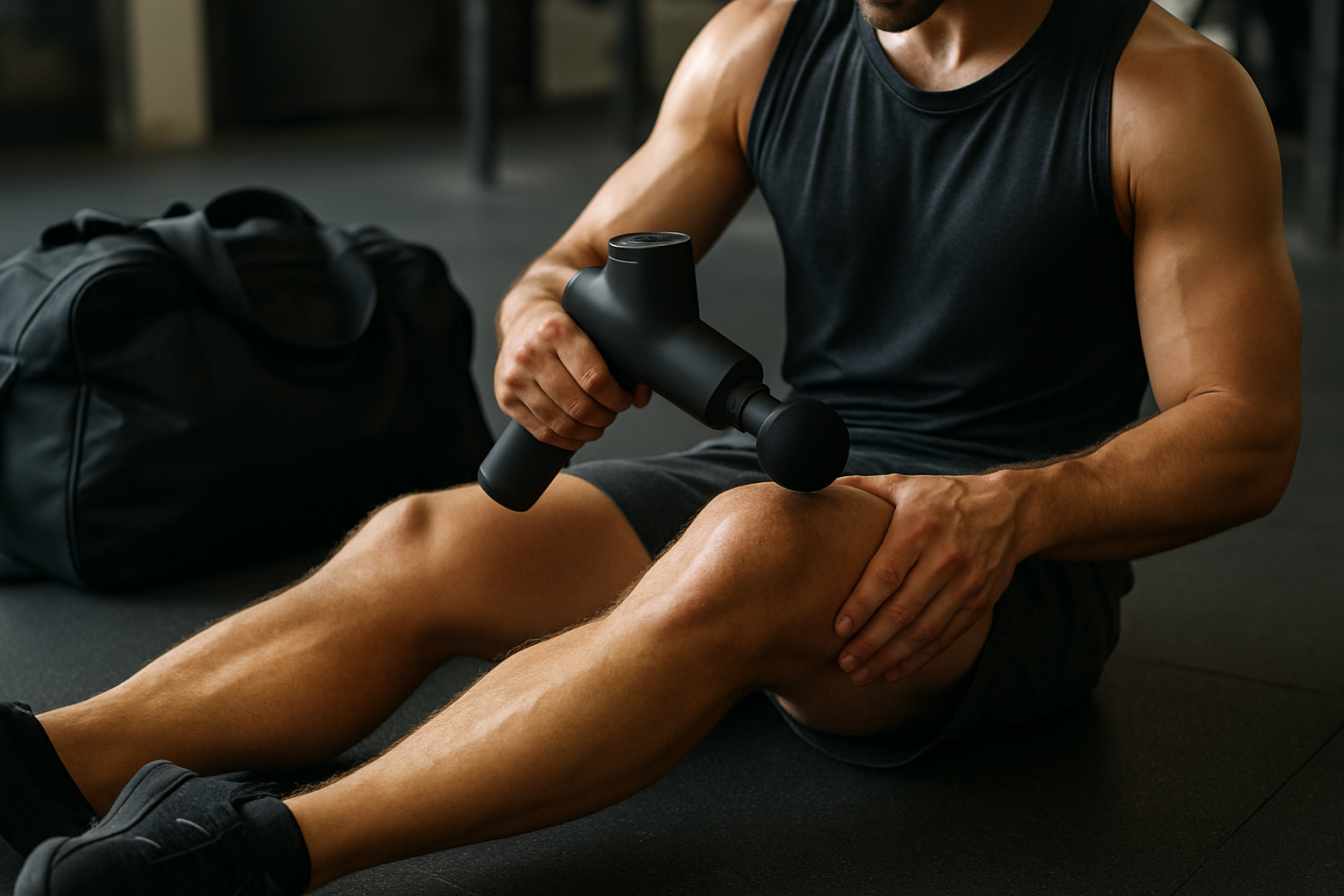
This is where modern recovery technology really shines. Percussion massage — the rapid, targeted vibration delivered by a massage gun — has been shown to reduce muscle soreness, improve range of motion, and speed up recovery time. It works by increasing local blood flow, breaking up knots in the fascia (the connective tissue surrounding your muscles), and stimulating your nervous system to reduce pain signals. Use it before a workout to warm up tissue or after to start the recovery process immediately.
Topical Recovery Creams
Don’t overlook what you put on your skin. Topical creams with ingredients like arnica, MSM (methylsulfonylmethane — a natural anti-inflammatory compound), and camphor can reduce localized soreness and inflammation fast. They’re especially useful for joint discomfort that accompanies heavy training sessions.
Sleep
Arguably the most powerful recovery tool you have costs nothing. Growth hormone — the hormone most responsible for muscle repair — is primarily released during deep sleep. If you’re cutting your sleep short, you’re literally cutting your recovery short. Aim for 7 to 9 hours per night, especially on days following intense training. It’s not lazy. It’s strategy.
Products Worth Trying for Faster Recovery
I’ve personally tested and vetted these tools. They’re affordable, effective, and a great addition to any serious recovery routine.
Massage Guns for Percussive Therapy
If you’re going to invest in one recovery tool, make it a massage gun. The TOLOCO Massage Gun is a fantastic entry point — it comes with 10 interchangeable massage heads for targeting different muscle groups, a powerful silent brushless motor, and it handles deep tissue work surprisingly well for its price point. It’s a go-to for post-leg day recovery.
If you want more customization in your sessions, check out the Elefor Massage Gun, which offers 20 speed settings and 8 massage heads. That range of intensity levels is genuinely useful — lower speeds work well for sensitive areas like your neck and upper traps, while the higher settings can really dig into your quads and glutes after a brutal squat session.
Want a massage gun that brings some extra recovery power? The AERLANG Massage Gun with Heat is worth a serious look. The built-in heat function adds thermotherapy to your percussive session, which can help loosen tight muscles even faster — especially on cold mornings when your body feels stiff before warming up. It’s quiet, comes with 7 heads, and makes a great gift for the athlete in your life too.
Topical Recovery Creams
For targeted soreness relief, I reach for Penetrex Daily Joint & Muscle Care Cream. It contains arnica, Vitamin B6, and MSM — three ingredients with real anti-inflammatory credentials. It absorbs quickly, isn’t greasy, and has a light scent that doesn’t overwhelm you. I’ll use this on my knees and elbows on days after heavy compound lifting.
Another solid option is the Silver Biotics Recover Muscle Cream, which combines a patented silver solution with arnica, jojoba oil, camphor, and Vitamin E