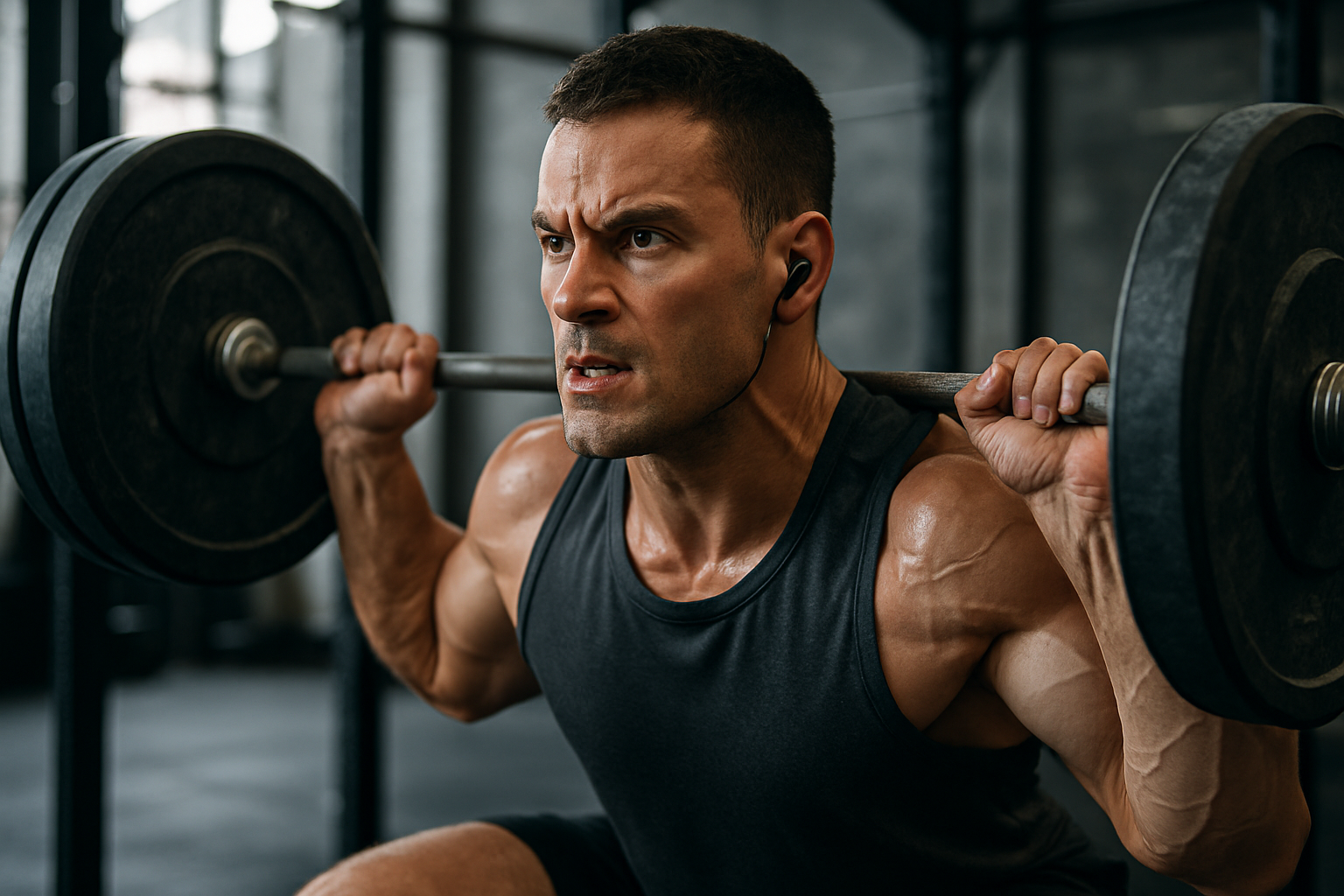
You’ve probably been there — halfway through a brutal set of squats, the music cuts out, and suddenly every rep feels twice as hard. Or maybe you’ve noticed that when your favorite hype song drops, you push out two or three extra reps you had no business completing. That’s not coincidence, and it’s not just in your head. Well, actually, it is in your head — and that’s exactly the point. Music workout performance improvement is a real, measurable, science-backed phenomenon, and once you understand how it works, you’ll never hit the gym without a carefully built playlist again.
This post contains affiliate links. As an Amazon Associate, I earn from qualifying purchases. If you click a product link and make a purchase, I may earn a small commission at no extra cost to you. I only recommend gear I genuinely believe in.
The Science Behind Music Workout Performance Improvement
Let’s get into it. Researchers have been studying the link between music and athletic output for decades, and the findings are consistently impressive. A landmark study by Dr. Costas Karageorghis at Brunel University London — one of the world’s leading experts on music and exercise — found that music can reduce the perception of effort by up to 12% and improve endurance performance by as much as 15%. That’s not a small margin. That’s the difference between finishing strong and hitting a wall.
Here’s what’s happening physiologically: music activates the brain’s motor cortex and limbic system simultaneously. The motor cortex controls movement, and the limbic system handles emotion and motivation. When a high-energy track syncs with your movement — think the beat dropping right as you hit your stride on the treadmill — your brain essentially locks in and reduces the mental noise that normally signals fatigue. Scientists call this entrainment, which just means your body naturally synchronizes its rhythm to an external beat. Your stride rate, pedaling cadence, or lifting tempo starts to mirror the tempo of the music.
On top of that, music triggers dopamine release. Dopamine is your brain’s feel-good reward chemical. More dopamine means better mood, higher pain tolerance, and more willingness to push through discomfort. That’s a powerful cocktail when you’re grinding through the last 10 minutes of a hard workout.
How to Build a Playlist That Actually Works
Not all music is created equal when it comes to performance. Here’s what actually matters when you’re curating your gym playlist:
Tempo Is Everything
For most workouts, you want music in the range of 120–145 BPM (beats per minute). This range aligns with elevated heart rates during moderate-to-high intensity training and promotes that natural entrainment effect. Warm-ups can sit around 100–120 BPM, peak intensity work should be 130–145 BPM, and cool-downs can drop back to 80–100 BPM. Apps like Spotify let you filter playlists by BPM, or you can use free tools online to check the tempo of your favorite songs.
Lyrics and Emotional Resonance Matter
Songs with motivational, assertive lyrics outperform instrumental tracks in high-intensity scenarios. Think about the songs that genuinely make you feel unstoppable — those emotional associations are real performance drivers. Build a playlist around tracks that have personal meaning to you, not just what’s trending. Your brain responds to songs it already has positive emotional ties to.
Don’t Shuffle Everything
Structure your playlist intentionally. Start with a moderate warm-up block, build into your hardest work with your most energizing tracks, then taper at the end. Treat it like a DJ set, not a random radio station. Your energy will follow the music if you program it right.
Gear I Recommend: The Best Earbuds for Training
None of this matters if your earbuds fall out mid-set or die 20 minutes into your session. I’ve rounded up the best options across different budgets and training styles so you can lock in your sound and focus on the work.
Best Overall for Heavy Training Sessions
If you want maximum battery life and bulletproof sound for long training blocks, check out these Wireless Earbuds with 75 Hours Bluetooth 5.4 playtime. They feature ENC noise-cancelling mics, IPX7 waterproofing, and secure earhooks built specifically for gym use. With 75 hours of total playtime, you could go a week of hard training without touching the charger. Deep bass and stereo sound make them a serious upgrade over budget buds.
Best Budget-Friendly Sport Earbud
The JLab Go Sport+ Wireless Workout Earbuds punch way above their price point. You get 35+ hours of Bluetooth playtime, a secure earhook design that won’t budge during dynamic movements, C3 Clear Calling technology, and three EQ sound settings so you can dial in the bass. These are perfect if you’re new to training with music and don’t want to invest heavily right away.
Best for Serious Sound Quality and Long Sessions
For athletes who want premium audio with active noise cancellation and an impressive 90-hour total playtime, these Active Noise Cancelling Wireless Earbuds are a standout pick. Hi-Res stereo sound, deep bass, earhook stability, and a transparency mode (which lets in ambient sound when you need it) make these incredibly versatile whether you’re lifting, running, or doing cardio classes.
Best for Outdoor Runners and Cyclists Who Need Situational Awareness
If you train outdoors, you need to hear what’s around you — traffic, other runners, trail hazards. That’s where bone conduction headphones shine. Bone conduction technology sends sound through your cheekbones directly to your inner ear, leaving your ear canal completely open. The PSIER Bone Conduction Headphones with Bluetooth 6.0 weigh just 23 grams, offer IPX5 waterproofing, and deliver 10 hours of playtime. Lightweight, safe, and surprisingly good sound for open-ear design.
Another solid bone conduction option is the CXK Bone Conduction Headphones with Bluetooth 6.0. These bring IPX6 waterproofing, premium loud sound, a built-in mic, and 10 hours of playtime — great for running, cycling, and walking without sacrificing your awareness of the environment around you.