This post contains affiliate links. As an Amazon Associate, I earn from qualifying purchases at no extra cost to you.
Last spring, I hit a wall. Not a motivational wall — a physical one. I was running my clients through a brutal 12-week strength block, and my own training was stacking up fast. Four days of heavy lifting, two conditioning sessions per week. My legs were constantly trashed. My upper back felt like concrete. I kept telling myself I’d stretch more, sleep better, do all the right things. I didn’t. What I needed was something that actually fit into a real training life — and that search led me straight to this Theragun Pro recovery review.
I’d been using cheaper percussion guns for years. You know the ones — loud as a lawnmower, two speed settings, dies after six months. They were fine. But fine doesn’t cut it when you’re coaching 40+ sessions a week and still trying to hit serious numbers yourself. I needed something built for daily, heavy use. Something with real depth, real control, and real reliability.
After 90 days of consistent use, I have a lot to say. Some of it will surprise you. Let’s get into it.
Why I Chose the Theragun Pro Over Everything Else
Honestly, I resisted Theragun for a long time. The price point felt hard to justify. Several coaches in my network had them, though, and every single one said the same thing: once you use a real one, you can’t go back. That kind of consistent feedback from people I trust means something.
I also did my homework. The TheraGun Pro Handheld Deep Tissue Massage Gun – Bluetooth Enabled Percussion Massage Gun & Personal Massager for Pain Relief & Circulation in Neck, Back, Leg, Shoulder and Body (Black – 5th Gen) specifically stood out for a few reasons. The 16mm amplitude is deeper than most competitors. The adjustable arm means you can actually reach your own back without a circus act. The force range — up to 60 lbs of pressure — is the real deal for dense muscle groups like glutes and lats.
Other options I considered included the Hypervolt and several mid-range guns. The Hypervolt felt smoother but shallower. Mid-range options had quality control issues I kept reading about. For someone who uses recovery tools professionally and personally, I wanted the best percussion device available without gimmicks. The 5th Gen Pro checked every box on paper.
First Impressions Out of the Box
The first thing I noticed was the weight. At around 2.2 lbs, it’s substantial but not fatiguing. It feels like a serious tool, not a toy. The build quality is immediately obvious — no rattling, no cheap plastic flex, no loose attachments. Everything snaps in clean.
The carrying case is a nice touch. It holds all six attachments neatly, plus the charger. I wasn’t expecting to care about the case, but it’s become part of my bag every time I travel to remote coaching locations.
The adjustable arm took about 30 seconds to understand. You rotate it through four positions, and it locks firmly each time. That feature sounds minor until you’re trying to hit your thoracic spine solo — then it’s everything. The OLED screen is small but clear, showing speed, battery life, and force in real time.
First use was on my quads after a heavy squat day — 5×5 at 87% 1RM, front-loaded with paused reps. I used the dampener attachment at speed 3 for two minutes per quad. Within about 90 seconds, I felt the difference. Not a miracle, but noticeably more flush than my old gun ever produced.
How I Tested It Over 90 Days
My Training Split During the Test Period
I followed an upper/lower split with a Saturday conditioning day throughout this test. Lower days included heavy squats, Romanian deadlifts (4×8 at 70-75% 1RM), leg press, and lunges. Upper days featured bench press, weighted pull-ups, barbell rows, and overhead pressing. Volume was high — averaging 18-22 sets per session.
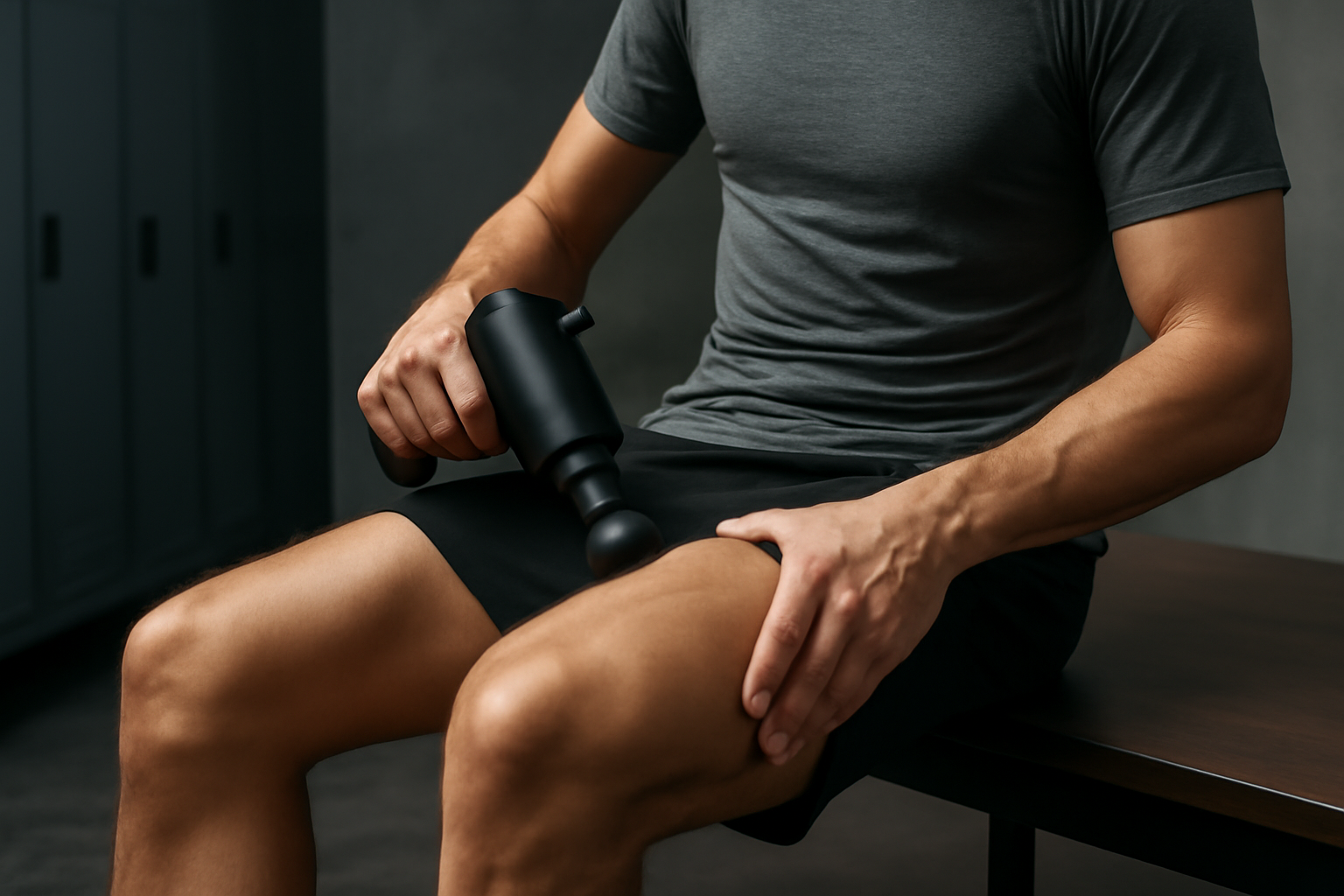
I used the TheraGun Pro Handheld Deep Tissue Massage Gun post-workout every single session. I also used it first thing in the morning on particularly sore days. Total usage averaged about 5-6 sessions per week, usually 10-15 minutes per session.
I tracked three things: perceived soreness on a 1-10 scale each morning, training readiness (could I hit planned numbers that day?), and sleep quality using my Garmin watch’s sleep score. I wasn’t running a clinical trial, but I was systematic about it.
Attachments I Used Most
- Dampener: Daily use on quads, hamstrings, and upper traps. Versatile and forgiving.
- Thumb attachment: Targeted work on piriformis and thoracic erectors. Excellent for deep tissue spots.
- Cone: Plantar fascia and forearms. Surprisingly effective for grip fatigue after heavy pulling days.
- Standard ball: General warm-up use before sessions. Broad surface coverage on lats and glutes.
Theragun Pro Recovery Review: What Actually Changed
Here’s the honest part. By week three, my morning soreness scores dropped noticeably. Before using the Pro, my average morning soreness after lower body days was around a 6-7 out of 10. After consistent post-workout and morning use, that average dropped to 3-4. That’s a meaningful difference in training readiness.
Specifically, my hamstrings — historically my worst recovery spot — felt dramatically better after Romanian deadlift sessions. I used the thumb attachment on the proximal hamstring insertion point for 90 seconds each side at speed 2. The next-day tightness that used to affect my squat depth on back-to-back training days was significantly reduced.
My sleep scores also ticked upward. Not dramatically — about 4-6 points on average — but consistently. Using the gun on my upper traps and neck for 5 minutes before bed became a genuine wind-down ritual. That mattered more than I expected.
The Bluetooth App: Useful or Gimmick?
I’ll be honest — I didn’t think I’d use the app. I was wrong. The Therabody app has guided routines that are actually well-designed. I used the “post-lower body” protocol twice a week for the first month. It walked me through attachment choices, timing, and pressure for each muscle group.
After month one, I built my own routine and stopped needing the app daily. However, the Bluetooth speed control is still useful. Dialing exact RPM from your phone while the gun is against your back — where you can’t see the screen — is genuinely practical. It’s not marketing fluff.
The battery life also impressed me. The rated 150 minutes of use is accurate in my experience. I charged it roughly twice per week. That’s it. No mid-session scramble for a cable.
The Downsides You Should Know
No product review from me is complete without real talk. Here are my genuine criticisms.
The price is genuinely high. There’s no spinning that. If you’re a casual gym-goer doing three sessions a week, this investment is hard to justify. A mid-range gun would serve you adequately. The Pro is built for heavy, consistent use — and the price reflects that.
It’s not silent. The 5th Gen is dramatically quieter than previous versions. That said, it’s still audible in a quiet room. Using it at 5 AM while someone sleeps nearby isn’t ideal. My wife had opinions about this.
The arm adjustment, while useful, requires both hands to change. Mid-session, that’s mildly annoying. It’s a small complaint but worth mentioning.
My moment of doubt came around week five. I had a brutal deadlift session — 4×4 at 90% — and my lower back was genuinely wrecked. I used the Pro on my erectors for longer than usual, hoping to speed things up. It didn’t. Lower back recovery still took two full days. Percussion therapy has limits, and acute spinal fatigue is one of them. Manage your expectations accordingly.
Who This Product Is NOT For
- Casual exercisers who train 2-3x per week at moderate intensity
- Anyone expecting it to replace actual programming, sleep, or nutrition
- Budget-conscious buyers — there are solid options at half the price
- Anyone with acute injuries — always consult a professional first
Final Verdict: Is the Theragun Pro Worth It?
After 90 days, my answer is clear. For high-frequency trainees, coaches, athletes, and anyone serious about recovery, this Theragun Pro recovery review lands firmly on the side of: yes, buy it.
The TheraGun Pro Handheld Deep Tissue Massage Gun – Bluetooth Enabled Percussion Massage Gun & Personal Massager for Pain Relief & Circulation in Neck, Back, Leg, Shoulder and Body (Black – 5th Gen) is the most well-built, practically designed percussion device I’ve used. The depth, the battery life, the adjustable arm, the quiet motor — all of it adds up to a tool that earns its place in a serious training arsenal.
Specifically, if you train four or more days per week, handle heavy compound movements regularly, or coach clients daily, this device will pay dividends. In my case, reduced soreness scores, improved training readiness, and better sleep were all measurable outcomes over three months.
On the other hand, if you train casually or you’re budget-limited, skip it. There are better ways to spend that money in your training setup.
The Runner-Up: Theragun PRO Plus
If you want to go one level further, consider the Therabody Theragun PRO Plus – 6-in-1 Deep Tissue Percussion Massage Gun. It adds heated attachments, vibration therapy, and biometric breathwork guidance on top of the standard percussion features. For rehab professionals or athletes managing chronic tension, those extras could be worth the premium. However, for most strength-focused trainers, the standard Pro delivers everything you actually need — without the added complexity.