This post contains affiliate links. As an Amazon Associate, I earn from qualifying purchases at no extra cost to you.
Most people who train shoulders consistently still end up with that flat, narrow look — decent front delts, almost nothing on the sides, and rear delts that are practically invisible. I see it constantly. The problem isn’t effort. It’s that the average shoulder workout overloads the anterior (front) deltoid and neglects the lateral and posterior heads almost entirely. Your shoulders have three distinct heads, and each one requires targeted stimulus to develop. The anterior deltoid gets hammered every time you bench press, overhead press, or do any pushing movement. The lateral head — the one that creates width and that coveted “capped” look — needs direct, deliberate work. The posterior deltoid, which is critical for posture, shoulder health, and balanced aesthetics, is the most undertrained muscle in most gym-goers’ entire program. This guide is going to fix that. I’m going to walk you through the best shoulder workout you can build, the exercises that actually move the needle, the mistakes that get people hurt, and a complete dumbbell-only option if you train at home.
The Best Shoulder Exercises by Deltoid Head
Anterior Deltoid
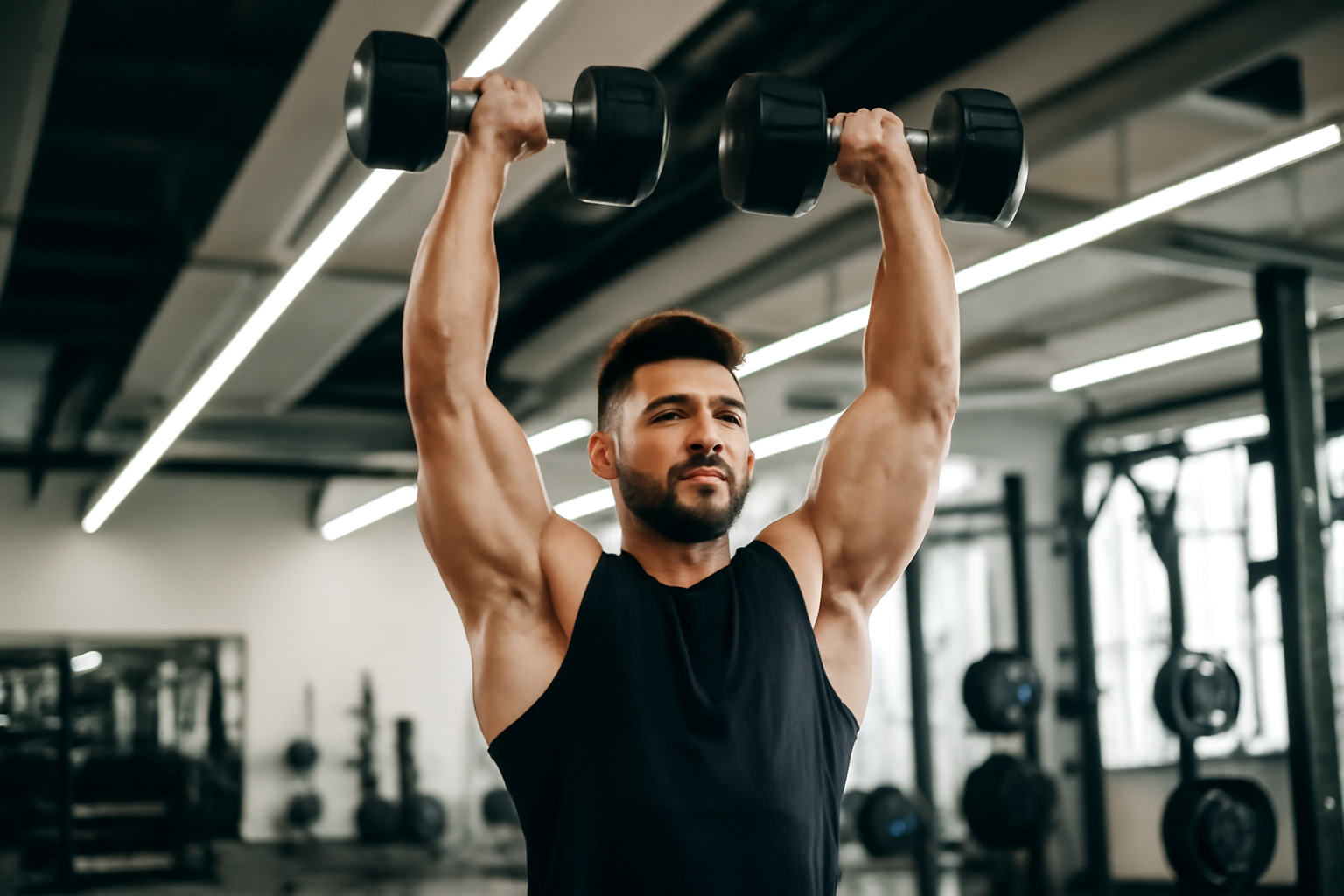
The anterior deltoid’s primary function is shoulder flexion — raising the arm forward. The overhead press, whether barbell or dumbbell, is the cornerstone anterior delt exercise and genuinely one of the best compound movements in any upper body program. It also recruits the lateral deltoid and triceps, making it incredibly efficient. Dumbbell pressing has a slight edge for range of motion and unilateral balance; barbell pressing allows heavier loading. I program both depending on the phase of training. Front raises are often included in shoulder workouts, but if you’re already benching and pressing, your anterior delts are getting plenty of stimulus. Front raises become redundant for most intermediate and advanced lifters. I occasionally include them for beginners who aren’t yet benching consistently, but as a rule, I don’t prioritize them.
Lateral Deltoid
The lateral head is what gives your shoulders width. Lateral raises — dumbbell, cable, or machine — are the primary tool here. Cable lateral raises are particularly effective because they maintain constant tension throughout the range of motion, unlike dumbbells which lose tension at the bottom. Machine lateral raises are underrated for fatigue sets at the end of a workout. Upright rows are controversial, and for good reason — if you flare the elbows too high and use a narrow grip, you’re inviting shoulder impingement. But a wide-grip upright row with elbows at or just below shoulder height is a legitimate lateral delt exercise when performed with control. The lateral head needs significantly more volume than the anterior because it receives almost zero indirect stimulation from compound pushing work. Plan for 12–20 sets per week if lateral delt development is a priority.
Posterior Deltoid
Reverse flyes, face pulls, and rear delt machine work are your tools here. Face pulls deserve special mention — they train the posterior deltoid and external rotators simultaneously, making them essential not just for aesthetics but for long-term shoulder joint health. Rear delt development also directly counteracts the forward shoulder posture that comes from too much pressing and too much sitting. Like the lateral head, the posterior deltoid receives almost no meaningful stimulus from overhead pressing. It needs its own dedicated volume. I typically program posterior delt exercises with higher rep ranges (15–20) since the muscle responds well to metabolic stress and sustained time under tension. Under-training your rear delts doesn’t just limit how your shoulders look — it creates the kind of muscle imbalance that leads to rotator cuff problems down the line.
The Complete Shoulder Workout
Here’s the full shoulder workout I use as a foundation with most intermediate trainees. It’s built around compound strength first, then lateral and posterior isolation work. Rest 90–120 seconds between pressing sets and 60 seconds between isolation sets.
- Overhead Press (Barbell or Dumbbell): 4 sets × 6–8 reps
- Lateral Raises (Dumbbell or Cable): 4 sets × 12–15 reps
- Reverse Flyes: 3 sets × 15–20 reps
- Face Pulls (Cable or Band): 3 sets × 15–20 reps
The overhead press carries the heavy compound load. Lateral raises are done with lighter weight and strict form — no momentum, no shrugging, no swinging. Reverse flyes and face pulls close out the session with high-rep posterior delt and rotator cuff work that doubles as injury prevention. This is a complete, balanced shoulder workout that hits all three deltoid heads with appropriate volume distribution.
For lateral raises and reverse flyes, the weight selection matters enormously. If you’re training at home and want equipment that lets you dial in the exact load for each exercise, the TYZDMY Adjustable Dumbbells Set of 2 is worth serious consideration. This set adjusts from just a few pounds up to 52.5 lbs per dumbbell — 105 lbs total across 15 weight increments — which means you can use the same pair for light lateral raises at 10 lbs and heavier dumbbell presses at 40+ lbs without buying a full rack. Most of my home-training clients benefit enormously from having a single pair that covers this range, and the quick-adjust mechanism makes switching between exercises during a workout genuinely seamless. These are a smart investment if you’re building out a home gym and want one piece of equipment that handles your entire shoulder workout.
If you prefer a more premium adjustable dumbbell with a well-established track record, the BowFlex Results Series 552 SelectTech Dumbbells are what I personally keep in my home setup. The dial-select system is fast, reliable, and the weight range — 5 to 52.5 lbs per dumbbell — covers everything in this shoulder workout from warm-up to working sets. What separates the BowFlex SelectTech from budget options is build quality and consistency; the weight plates lock securely, and there’s no rattling or instability during pressing movements. These have been a staple recommendation of mine for years because they genuinely hold up to daily training.
Shoulder Training Mistakes That Lead to Injury
Going Too Heavy on Lateral Raises
This is probably the most common mistake I see in shoulder exercises. People load up lateral raises with weight they can’t control, start swinging their torso, shrugging their traps, and using every muscle except the lateral deltoid. The result is poor stimulus on the target muscle and significant stress on the rotator cuff. Go lighter. The lateral deltoid doesn’t need heavy weight — it needs tension and proper mechanics. If you can’t hold the top position for a half-second without momentum carrying the weight, drop down.
Behind-the-Neck Pressing
Behind-the-neck barbell presses place the shoulder in a position of extreme external rotation and horizontal abduction simultaneously. This compresses the structures of the subacromial space and puts the rotator cuff in a mechanically disadvantaged position under load. Research consistently flags this movement as a high impingement risk. There is no meaningful advantage to behind-the-neck pressing that you can’t get from a standard overhead press with better safety margins. I’ve never programmed it and I don’t recommend it.
Ignoring Rear Delts
Skipping posterior deltoid work creates a muscle imbalance between your internal and external rotators that progressively pulls your shoulders into a forward-rounded position. Over time, this pattern stresses the rotator cuff tendons and the biceps long head tendon, both of which are already vulnerable in heavy overhead athletes. Beyond the injury risk, rear delt neglect flattens your shoulder silhouette from the side. Build face pulls and reverse flyes into every shoulder workout — not as an afterthought, but as a deliberate training priority.
Skipping the Rotator Cuff Warm-Up
Your rotator cuff — the infraspinatus, teres minor, subscapularis, and supraspinatus — stabilizes the glenohumeral joint under load. Going into heavy overhead pressing without activating these muscles first is a fast track to impingement. Two to three sets of band pull-aparts and external rotation work before your working sets takes under five minutes and significantly reduces injury risk. Resistance bands are ideal for this purpose because they provide accommodating resistance without loading the joint.
For rotator cuff warm-ups and lighter shoulder exercises, I keep a set of the RENRANRING Figure 8 Fitness Resistance Bands with Handles in my gym bag. The figure-8 design is specifically useful for shoulder external rotation drills, face pull variations, and front/lateral raise warm-up movements because the handles give you a stable grip while the band provides smooth, continuous tension. This set includes three resistance levels, which lets you match the band to the specific warm-up exercise. These are compact, inexpensive, and genuinely useful for pre-activation work before any shoulder session.
Shoulder Workout With Dumbbells Only
You don’t need a commercial gym to run an effective shoulder workout. Here’s a complete dumbbell-only shoulder routine I use with home-training clients:
- Dumbbell Seated Overhead Press: 4 sets × 8–10 reps
- Dumbbell Lateral Raises: 4 sets × 12–15 reps
- Dumbbell Reverse Flyes (bent-over): 3 sets × 15–20 reps
- Dumbbell Arnold Press: 3 sets × 10–12 reps
- Dumbbell Front-to-Lateral Raise Combo: 2 sets × 12 reps each direction
The Arnold press is a smart addition to a dumbbell-only shoulder workout because it incorporates a rotation component that recruits more of the anterior and lateral delt throughout the movement. Bent-over reverse flyes replicate the function of a rear delt machine effectively. The front-to-lateral raise combo at the end adds finishing volume across both the anterior and lateral heads without needing additional equipment.
If you need a budget-friendly resistance option to supplement your dumbbell shoulder exercises — particularly for band pull-aparts, external rotation warm-ups, or face pull substitutes at home — the Lianjindun 5-Piece Professional Resistance Bands Set is a reliable choice. This latex-free set includes five progressive resistance levels, which gives you the flexibility to use lighter bands for rotator cuff activation and heavier bands for assisted shoulder stretching and accessory work. Latex-free is a meaningful feature for people with sensitivities, and the range of resistance levels makes this set more versatile than single-band options. I recommend keeping a set like this alongside your dumbbells so you can always run a full warm-up protocol regardless of where you’re training.
Final Thoughts
A well-built shoulder workout isn’t complicated, but it does require intentional programming across all three deltoid heads. Start with a compound press for strength and anterior delt development, then invest real volume into lateral raises and posterior deltoid work. Warm up your rotator cuff before heavy pressing. Avoid the ego-loading trap on isolation shoulder exercises. Whether you’re running the best shoulder workout in a fully equipped gym or doing a dumbbell-only session at home, the principles are the same: balanced stimulus, controlled technique, and consistent progressive overload over time. That’s what actually builds the shoulders most people are training for.