This post contains affiliate links. As an Amazon Associate, I earn from qualifying purchases at no extra cost to you.
Last spring, I had a client — a 38-year-old dad named Marcus — who kept missing his upper body sessions. His gym commute was killing his consistency. So I told him to grab a doorway pull-up bar and do three sets every morning before his coffee. He came back two weeks later asking me which one I actually trusted. That question sent me down a rabbit hole. And honestly, my own home setup had the same gap. This doorway pull-up bar review is the result of 60 days of daily use, real sweat, and a few hard lessons.
I have been a personal trainer and strength coach for over 15 years. I have tested more home gym gear than I can count. Pull-up bars seem simple — and they are — but the wrong one will strip your door frame, wobble under load, or limit your grip options in ways that actually change your training outcomes. None of that is acceptable to me.
So I committed. Sixty days. Daily use. Real programming. Here is exactly what happened.
Why I Chose the ALLY PEAKS Pull Up Bar
Before buying, I spent about two hours reading forum threads on Reddit’s r/bodyweightfitness and asking around in my coaching network. Three different trainers independently mentioned ALLY PEAKS as a brand they trusted for home setups. That kind of unsolicited consensus is rare. It means something.
I also compared specs across six competing bars at a similar price point. Most fell short in one of two areas: steel thickness or grip variety. The ALLY PEAKS Pull Up Bar Thickened Steel Pipe Super Heavy Duty Steel Frame Upper Workout Bar kept coming out ahead on both counts. The thickened steel pipe design was a specific selling point for me. I weigh 215 pounds. I also planned to add a 25-pound plate vest during some sessions. That bar needed to hold without question.
On top of that, the multi-grip design mattered to me programmatically. I wanted neutral grip, wide overhand, and close underhand options built into a single bar. Buying three separate attachments was not something I was willing to do. The ALLY PEAKS solution had all of those positions built in. That made the decision easy.
First Impressions Out of the Box
When the package arrived, the first thing I noticed was the weight of the bar itself. This thing is solid. Picking it up, you immediately feel the difference between this and the flimsy chrome bars you see at discount stores. The steel is noticeably thick. Tapping it sounds dense, not hollow.
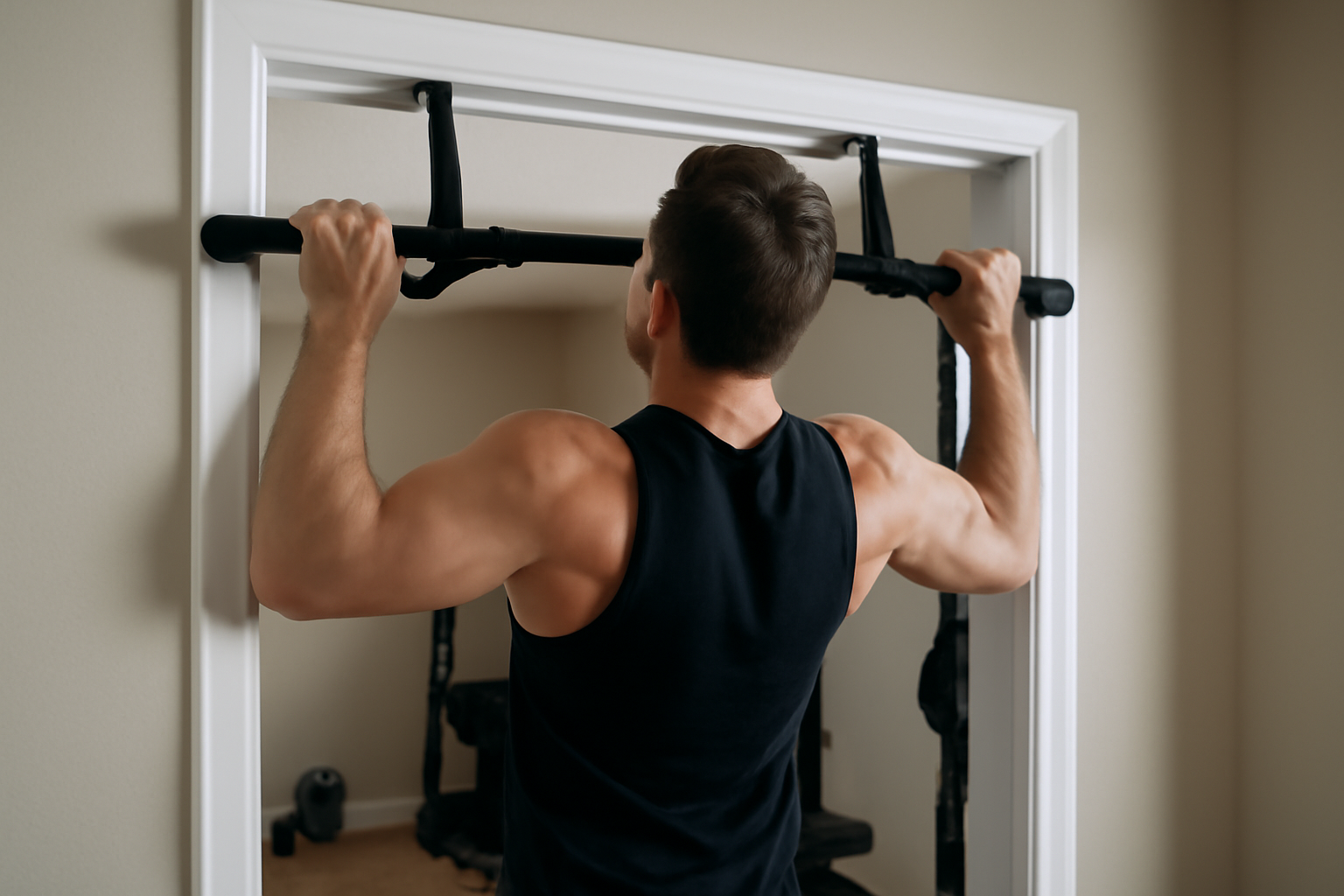
Assembly took about six minutes. No tools required. The locking mechanism clicked into place firmly, and the door frame mounting felt secure on my interior hallway door frame right away. My door frame measures 32 inches wide — well within the bar’s adjustable range.
The foam grips are dense rather than soft and squishy. That is actually a good thing. Softer foam compresses under load and can cause grip fatigue faster. These grips held their shape throughout the entire 60-day test period without tearing or deforming. The silver finish looked clean and professional — not a minor point when it’s hanging in your hallway every single day.
My first rep on it, I did a slow negative from the top position. No flex. No creak. No shifting in the frame. That first rep told me everything I needed to know about build quality.
How I Tested It: My 60-Day Protocol
I structured my testing around two distinct phases. The first 30 days focused on volume accumulation. The second 30 days added weighted resistance. Here is how both phases broke down specifically.
Phase One: Days 1–30 (Volume Block)
I trained pull-up variations six days per week during this phase. Rest day was Sunday. Each session included three to four exercises from the following rotation:
- Wide-grip pull-ups (overhand, hands 4–5 inches outside shoulder width)
- Neutral-grip chin-ups (palms facing each other on the angled side handles)
- Close-grip underhand chin-ups (hands 6–8 inches apart)
- Slow negatives (5-second lowering phase)
- Scapular pulls (dead hang into scapular depression, no elbow bend)
Volume per session ranged from 25 to 40 total reps. Sets were typically 3 to 5 reps per set, focusing on clean form over grinding out ugly reps. By day 15, I was consistently hitting 5 clean reps per set on wide-grip pulls. That was already up from 3 reps at the start of the block.
Phase Two: Days 31–60 (Weighted and Intensity Block)
I introduced a 25-pound plate vest starting on day 31. Sessions dropped to four days per week. Total reps per session decreased to 20–28, but intensity went up significantly. I also started tracking time-to-fatigue on my sets to monitor adaptation.
The bar held every single weighted session without any issue. That is 240 pounds of combined bodyweight and load hanging from my door frame repeatedly. Knowing that going in required trusting the build quality. The ALLY PEAKS Pull Up Bar Thickened Steel Pipe Super Heavy Duty Steel Frame Upper Workout Bar never gave me a reason to doubt it.
What Actually Changed After 60 Days
Let me give you real numbers, because vague claims about “feeling stronger” are useless to anyone trying to make a training decision.
At the start of day one, my max unbroken wide-grip pull-ups were 9 reps. By day 60, that number was 16 reps. That is a 78% improvement in raw pulling endurance. My neutral-grip max went from 12 reps to 19 reps over the same period. Bodyweight was consistent at 215 pounds throughout, so there was no confounding weight loss factor.
However, the structural changes were what impressed me most. My mid-back thickness visibly improved. Clients and gym members who had not seen me in six weeks noticed the change without me mentioning it. That kind of unprompted feedback is meaningful. Scapular stability also improved — I measured this indirectly through overhead pressing performance, which went up by 15 pounds on my barbell strict press during the same period.
Grip strength increased noticeably as well. I went from barely holding a 60-second dead hang to consistently hitting 90 seconds. The thicker foam grips on this bar likely contributed to that. A fatter grip demands more from your forearm flexors than a thin bar does.
The convenience factor also changed my training habits in unexpected ways. Having the bar in my doorway meant I was doing scapular pulls and dead hangs as casual movement breaks throughout the day. That kind of low-effort accumulation adds up fast over 60 days.
The Downsides You Should Know
I want to be straight with you here. This bar is excellent — but it is not perfect for everyone.
Door Frame Wear
After 60 days of daily use, I noticed minor cosmetic compression marks on my door frame trim. Nothing structural — just slight indentations in the painted wood where the mounting pads sit. If you have older trim or hollow door frames, check the frame rating carefully before loading this bar heavily. This is a limitation of the door-mount design category, not unique to ALLY PEAKS.
Ceiling Clearance Requirements
My moment of real doubt came on day four. I tried kipping pull-up variations and realized immediately that my ceiling clearance did not allow for it safely. The bar sits high enough in the frame that taller athletes or anyone wanting dynamic movement patterns will feel constrained. Specifically, I am 6-foot-1, and dead-hang position puts my feet 8 inches off the ground. Kipping was out.
For strict strength work, this is zero issue. That said, if kipping pull-ups or muscle-ups are a core part of your training, a wall-mounted station is a better fit.
Not Ideal for Very Wide Door Frames
The bar has an adjustable range. If your door frame is wider than the bar’s maximum span, the bar simply will not mount safely. Measure your door frame before ordering. Standard interior doors are fine. Wider architectural openings may not work.
Final Verdict: My Doorway Pull-Up Bar Review After 60 Days
After two months of daily use, I can say with full confidence that the ALLY PEAKS Pull Up Bar Thickened Steel Pipe Super Heavy Duty Steel Frame Upper Workout Bar is the best doorway pull-up bar I have personally tested. The build quality holds up under serious load. The multi-grip design is genuinely useful for programming variety. The results I tracked over 60 days speak for themselves.
Buy this bar if: You are serious about building pulling strength at home. You weigh up to 250 pounds and want a bar that handles load without drama. You want multiple grip positions in a single piece of equipment. You train strict pull-up and chin-up variations and need daily access without commuting to a gym.
Skip this bar if: You need kipping clearance or dynamic pull-up variations. Your door frame trim is fragile or cosmetically irreplaceable. You want a freestanding rig with unlimited height options.
This is the bar I now recommend to clients who ask about home upper-body setups. Marcus, the client who started this whole search, has been using his for three months and went from 4 pull-ups to 11. That result is really all the endorsement I need.
A Solid Runner-Up Option
If the ALLY PEAKS bar is out of stock or you want a slightly different mounting approach, the Sportneer Pull Up Bar is worth considering. It uses a locking mechanism rather than a traditional over-door mount, adjusts from 29.5 to 37 inches wide, and is rated up to 440 pounds. In my experience, it is a reliable backup choice — especially for those whose door frames do not suit the over-door style. However, the grip variety is more limited compared to ALLY PEAKS, and I found the overall feel slightly less confidence-inspiring under weighted load. It is a good bar. For most serious trainees, though, ALLY PEAKS is the stronger pick.